Peter Paul Parker's Official Website
Articles And Guidance
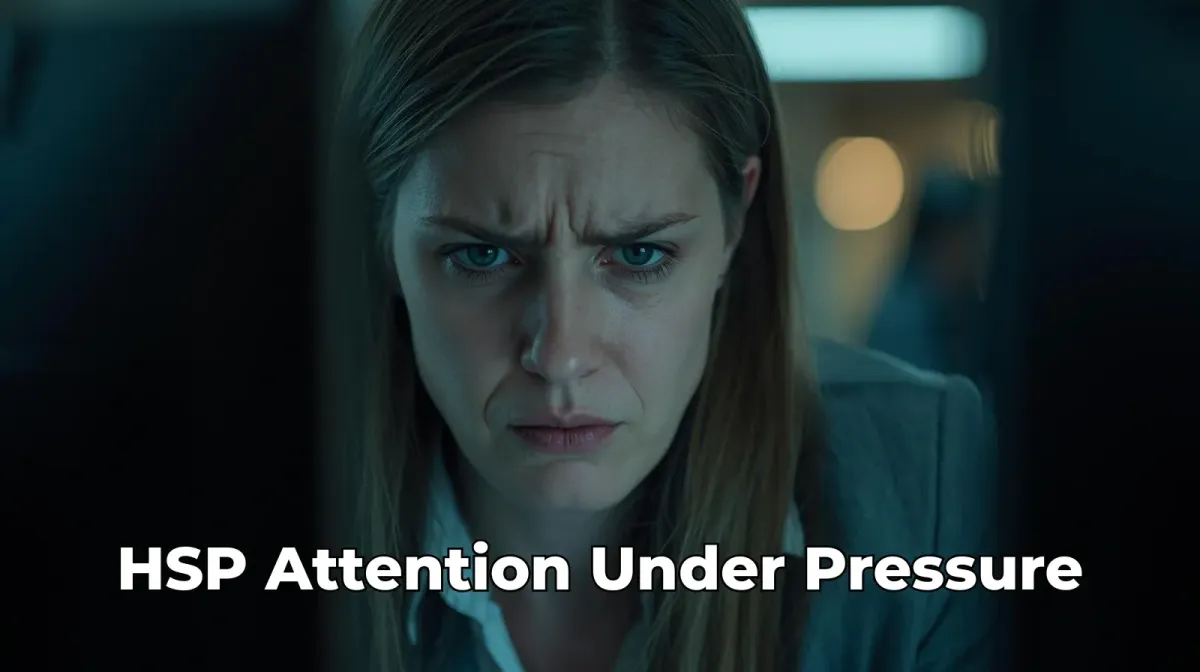
HSP Attention Under Pressure: Focus, Fatigue, and Gentle Strategies
Many highly sensitive people struggle with focus — but not in the way it’s usually described.
You may be capable, intelligent, and deeply thoughtful.
You may concentrate beautifully in calm conditions.
You may even enter states of deep flow.
And yet, under pressure, your attention collapses.
Your mind scatters.
Your energy drains.
Simple tasks feel strangely hard.
This often leads to painful self-judgements:
“Why can’t I just concentrate?”
“What’s wrong with me?”
“Why does everyone else seem to cope?”
This article reframes that experience.
Because for HSPs, attention problems are rarely about motivation or ability.
They are usually about nervous-system overload.
This article sits within the wider framework of
What Is a Highly Sensitive Person? A Complete Guide and offers a compassionate, practical understanding of focus, fatigue, and pressure — without pathologising sensitivity.
Why Focus Feels Fragile for HSPs
Highly sensitive people process more information more deeply.
This includes:
Sensory input
Emotional tone
Environmental changes
Unspoken dynamics
Your nervous system is constantly taking in data others filter out.
This is not a flaw.
But it means your attention is resource-dependent.
When resources are available, focus can be excellent.
When resources are depleted, attention falters quickly.
This is why HSP focus is often context-sensitive, not inconsistent.
Attention Under Pressure: What Actually Happens
Pressure changes the nervous system state.
Deadlines, expectations, interruptions, or emotional stress signal:
“Something important is at stake.”
For many HSPs, this pushes the system out of regulation.
Instead of supporting focus, pressure triggers:
Hypervigilance
Over-monitoring
Mental noise
Energy drain
Attention isn’t lost because you don’t care.
It’s lost because the system is trying to protect.
This dynamic overlaps strongly with what happens during emotional triggers, explored in
HSP Relationship Triggers: Regulation First.
Focus vs Fatigue: A Crucial Distinction
Many HSPs believe they have a focus problem.
In reality, they often have a fatigue problem.
Fatigue for HSPs is not just physical.
It includes:
Sensory fatigue
Emotional fatigue
Decision fatigue
Social fatigue
When fatigue is present, attention becomes unreliable.
Trying to “push through” usually makes things worse.
This is why focus strategies that ignore energy often fail HSPs.
Why Multitasking Is Especially Hard for HSPs
Multitasking increases cognitive load for everyone — but especially for sensitive nervous systems.
Each switch requires:
Re-orientation
Sensory adjustment
Emotional recalibration
For HSPs, this cost is higher.
The result can be:
Mental fog
Irritability
Shutdown
Reduced confidence
What looks like poor attention is often over-extension.
The Role of the Nervous System in Attention
From a nervous-system perspective, focus depends on felt safety.
When the system feels safe:
Attention narrows naturally
Thinking becomes coherent
Energy is available
When the system feels threatened:
Attention fragments
The mind scans for danger
Fatigue increases
This pattern is explained further in Polyvagal Basics for Sensitive People.
Attention follows regulation.
Why HSPs Focus Better Alone (or in Safe Spaces)
Many HSPs notice they focus best:
In quiet environments
Without being watched
When expectations are low
When time pressure is reduced
This isn’t antisocial.
It’s neurological.
Reduced stimulation frees up capacity for attention.
This also explains why some HSPs struggle in open-plan offices or busy homes.
Gentle Strategies for HSP Attention Under Pressure
HSP-friendly focus strategies work with sensitivity, not against it.
Here are approaches that respect nervous-system limits.
1. Lower the Bar (On Purpose)
Perfectionism increases pressure — which collapses attention.
Instead of asking:
“Can I do this well?”
Try:
“What’s the smallest acceptable step?”
Lowering internal pressure often restores focus.
This connects with people-pleasing and over-functioning patterns explored in
People-Pleasing Recovery for HSPs: Kind No Without Guilt.
2. Work in Short, Protected Windows
Long focus sessions often exhaust HSPs.
Short, contained periods work better.
Examples:
15–25 minutes
One task only
Clear beginning and end
Protection matters more than duration.
3. Reduce Sensory Load Before Cognitive Work
Before focusing, ask:
Is the environment too loud?
Too bright?
Too visually busy?
Small adjustments — lighting, sound, posture — can dramatically improve attention.
4. Use Transition Rituals
HSP nervous systems need clear transitions.
Simple rituals help shift into focus:
A few slow breaths
Standing up and sitting down
A short walk
Closing unrelated tabs
This signals:
“Now we are doing one thing.”
5. Build Recovery Into the Day
Attention cannot be sustained without recovery.
Helpful recovery for HSPs includes:
Quiet breaks
Nature
Gentle movement
Silence
This is not laziness.
It is maintenance.
This principle overlaps with Overwhelm Recovery Routines for HSPs.
When Focus Problems Trigger Shame
Many HSPs carry deep shame around attention.
They may have been labelled:
Distracted
Lazy
Underperforming
These labels often ignore nervous-system reality.
Shame increases pressure.
Pressure reduces focus.
The cycle repeats.
Breaking this cycle requires self-compassion, not discipline.
Attention, Trauma, and Emotional Load
If you have a trauma history, attention difficulties may intensify under stress.
This does not mean you are incapable.
It means your system is prioritising safety.
Understanding this can be deeply relieving.
This overlap is explored in Emotional Flashbacks vs Flashbacks: Clear Terms.
Gentle Focus Is Sustainable Focus
For HSPs, sustainable attention looks different.
It is:
Rhythmic, not constant
Supported, not forced
Flexible, not rigid
When you work with your sensitivity, focus often improves naturally.
When to Seek Support
If attention issues are:
Severely impacting daily life
Accompanied by extreme fatigue
Linked to anxiety or shutdown
Support may help.
This does not mean something is “wrong” with you.
It means your system may need care, not correction.
Next steps
If focus has become a source of shame or exhaustion, nothing has gone wrong.
Your nervous system may simply be asking for a kinder pace.
Free Soul Reconnection Call — A calm, one-to-one space to explore sensitivity, focus, and nervous-system support.
Dream Method Pathway — A self-paced 5-step journey (Discover → Realise → Embrace → Actualise → Master) designed to help HSPs work with their sensitivity rather than against it.

HSP Attention Under Pressure: Frequently Asked Questions
Why do HSPs lose focus under pressure?
Because pressure increases nervous-system activation, which fragments attention.
Is this ADHD or just sensitivity?
Some HSPs also have ADHD, but many attention issues are context-dependent and regulation-based.
Why can I focus well sometimes but not others?
Because attention depends on energy, safety, and sensory load.
Should I push myself to build focus stamina?
Gentle capacity-building helps. Pushing usually backfires.
Can attention improve with self-understanding?
Yes. Many HSPs focus better once shame and pressure reduce.
Further Reading
If focus collapses under stress or expectation, these resources explore why sensitive nervous systems tire faster — and how to support them:
HSP Emotional Loneliness: Why You Can Feel Lonely in a Crowd
Sensitivity as a Trait, Not Trauma: A Clear, Kind Explanation
Sensory-Friendly Home for HSPs: Light, Noise, and Nervous-System Ease
I look forward to connecting with you in my next post.
Until then, be well and keep shining.
Peter. :)

Cornerstone Articles




Feeling Spiritually Lost? 🢂


Copyright Peter Paul Parker 2023 <<< ✺✺✺✺✺✺✺✺✺✺✺✺✺✺✺✺✺✺✺✺✺ >>> Terms And Conditions - >>> Privacy - Linked In - YouTube - Facebook -