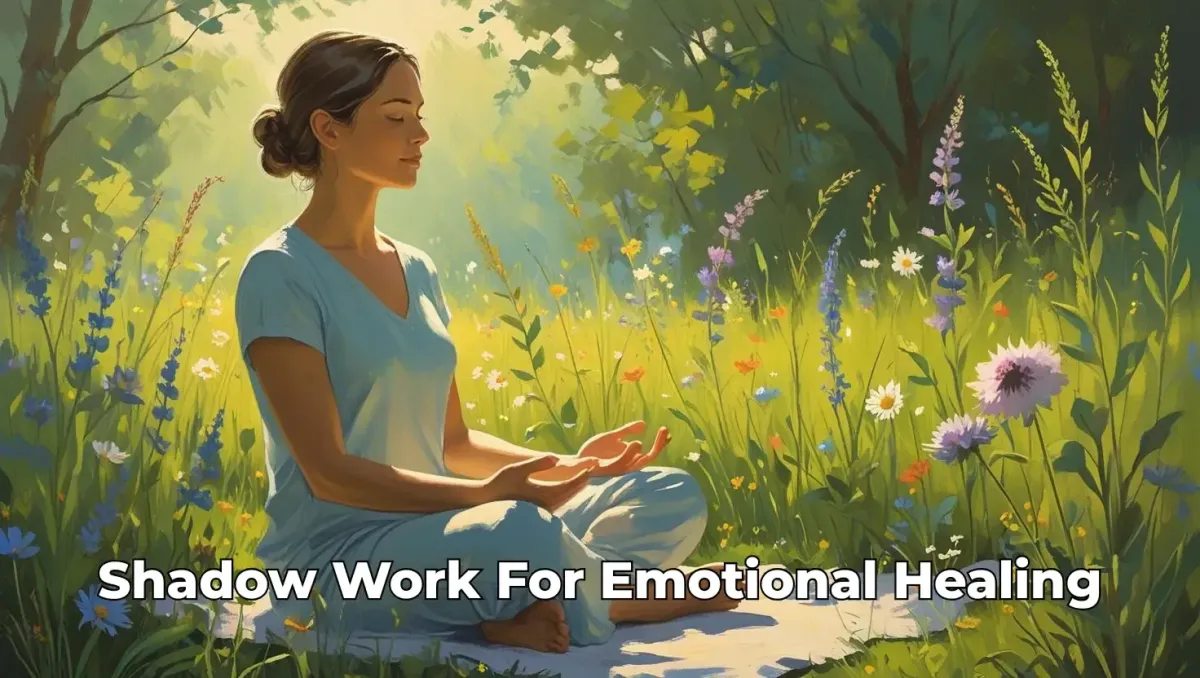
Shadow Work and Emotional Healing
Shadow work and emotional healing are deeply connected.
If you are carrying anger, grief, shame, resentment, or numbness that never seems to fully shift, this is often because those emotions were never safely processed.
They were suppressed.
Minimised.
Judged.
Or pushed aside to survive.
Shadow work gives you a structured way to return to those hidden emotions safely.
It does not ask you to relive everything at once.
It does not force you to “fix” yourself.
It teaches you how to integrate what was never allowed to be felt.
If you are new to this work, you may want to start with What Is Shadow Work? A Complete Guide for a full overview of the practice.
And if your focus is specifically emotional recovery, you may also find Emotional Healing & Emotional Trauma: The Complete Guide helpful as a wider foundation.
In this article, we will focus on one clear question:
How does shadow work support emotional healing in practical, real terms?

Why Emotional Healing Actually Means
Emotional healing does not mean becoming calm all the time.
It does not mean never feeling anger, sadness, fear, or jealousy again.
Emotional healing means your emotions no longer control your behaviour from the shadows.
It means you can feel an emotion without being overwhelmed by it.
It means a trigger still registers — but it does not hijack you.
Unprocessed emotions tend to show up as:
• Overreactions that feel bigger than the situation
• Emotional numbness
• People-pleasing or over-control
• Recurring conflict in relationships
• Physical tension or chronic stress
When emotions are suppressed long enough, they do not disappear.
They turn into patterns.
Shadow work helps you locate those patterns and trace them back to the emotions underneath.
Instead of asking, “What is wrong with me?”
You begin asking, “What has not been fully felt yet?”
That shift changes everything.
If you notice that your emotional reactions are often triggered in relationships, you may also find Shadow Work and Relationships: Healing Triggers with Compassion helpful alongside this guide.
And if you are unsure how shadow work itself functions at a deeper level, return to What Is Shadow Work? A Complete Guide for the full framework.
How Shadow Work Heals Suppressed Emotions
Shadow work begins with a simple truth:
What is suppressed does not disappear.
It waits.
When an emotion was judged unsafe in the past, it was pushed into the background.
Anger became silence.
Grief became numbness.
Fear became control.
Jealousy became self-criticism.
The emotion did not vanish.
It changed shape.
Shadow work gently reverses that process.
Instead of reacting automatically, you slow down and ask:
• What am I actually feeling?
• When have I felt this before?
• What part of me is trying to protect something?
This creates awareness.
Awareness creates space.
And space allows the emotion to move rather than stay frozen.
Over time, three things begin to happen.
1. You recognise patterns sooner.
You see the reaction building before it explodes.
2. You feel emotions in smaller, manageable waves.
Not all at once. Not overwhelming. Just enough to process.
3. You integrate the meaning behind the emotion.
Anger reveals a boundary.
Sadness reveals loss.
Jealousy reveals desire.
Fear reveals vulnerability.
Instead of fighting the emotion, you learn from it.
That is emotional healing in action.
If you find that your reactions are intense or difficult to regulate, you may benefit from learning about titration in Shadow Work Titration: Safe, Small Steps. Small doses create safer integration.
And if mental spiralling is part of the pattern, Shadow Work for Overthinkers: A Gentle Guide can support that specific lane without overwhelming this one.
Some emotional patterns, such as people pleasing and self-abandonment, develop as protective responses to earlier experiences. This is explored more fully in People-Pleasing and Shadow Work: From Self-Abandonment to Self-Respect
Could Earlier Emotional Experiences Be Part Of The Pattern?
As you begin recognising the emotions and protective patterns beneath your reactions, you may start wondering where some of them first developed.
Not every emotional pattern begins in childhood. However, earlier experiences can sometimes influence the ways we respond to rejection, criticism, conflict, closeness or the need for approval later in life.
If childhood emotional experiences seem particularly relevant to what you are discovering, my free Emotional Childhood Wounds Webinar can help you explore those connections more deeply.
The webinar looks at how earlier emotional experiences may continue to influence thoughts, emotional reactions, relationships and protective patterns in adult life. I also introduce the Dream Method as a compassionate framework for understanding what you discover.
Watch The Free Emotional Childhood Wounds Webinar

The Nervous System And Emotional Integration
Emotional healing is not just psychological. It is physiological.
When emotions are suppressed, the nervous system adapts. It learns to brace, tighten, shut down, or stay on alert. Over time, this becomes automatic.
You may notice tension in your jaw or shoulders. A shallow breath. A quick surge of irritation. Or a sudden drop into numbness.
These are not personality flaws. They are nervous-system responses shaped by earlier emotional experiences.
Shadow work supports emotional healing because it slows the system down.
Instead of reacting instantly, you pause and bring attention to the body. You notice the tightening before it becomes an outburst. You notice the heaviness before it becomes withdrawal.
This small pause gives the nervous system new information.
It learns that the emotion can be felt without danger. It learns that you are no longer in the past moment that first created the pattern.
Integration happens when the body realises it is safe enough to feel.
Practices such as slow breathing, grounding, or gentle movement help regulate this process. You may find it helpful to read Window of Tolerance for HSPs: A Quick Map to Feel Safe Again for a simple explanation of how emotional activation moves through the system.
If you prefer body-based support alongside reflection, Somatic Shadow Work for HSPs: A Gentle, Body-Based Guide offers practical integration tools.
When the nervous system feels steadier, emotional healing becomes sustainable rather than overwhelming.

A Simple 3-Step Emotional Healing Process
Shadow work does not need to be complicated to be effective. Emotional healing often unfolds through small, repeatable steps rather than dramatic breakthroughs.
Here is a simple structure you can return to.
1. Notice the Pattern
Before healing can happen, the pattern must be seen.
You might notice:
A recurring trigger in relationships
A familiar emotional reaction that feels bigger than the situation
A physical tightening when certain topics arise
A cycle of withdrawal, over-explaining, or self-criticism
Instead of judging the reaction, pause and describe it.
What happened?
What did you feel?
What did your body do?
This builds awareness without escalation.
If triggers are a regular challenge, Shadow Work and Relationships: Healing Triggers with Compassion explores this more deeply.
2. Allow the Emotion in Small Doses
Emotional healing does not require diving into the deepest memory immediately. It works better in manageable waves.
You might:
Sit with the feeling for 60–90 seconds
Place a hand on your chest and breathe slowly
Name the emotion quietly: “This is anger.” “This is sadness.”
Ask, “What is this emotion trying to protect?”
The goal is not intensity. The goal is contact.
If staying present feels difficult, learning titration through Shadow Work Titration: Safe, Small Steps can help you regulate the pace.
3. Integrate the Insight
Every emotion carries information.
Anger may point to a boundary.
Sadness may point to loss.
Fear may point to vulnerability.
Jealousy may point to an unexpressed desire.
Once you recognise the message, ask yourself:
What small action would honour this?
It might be a conversation.
It might be rest.
It might be saying no.
It might be admitting what you truly want.
Integration is where emotional healing becomes change.
If you would like a structured framework for applying this process consistently, Shadow Work with the Dream Method: Safe, Structured & Kind explains how to turn insight into daily practice.
Signs Your Emotional Healing Is Working
Emotional healing rarely feels like a sudden breakthrough.
More often, it shows up in subtle shifts.
You may notice that you pause before reacting. The trigger still lands, but there is a small space before your response.
You might recover more quickly after emotional discomfort. Instead of spiralling for hours or days, you return to steadiness sooner.
You may begin to recognise patterns in real time. You hear the tone in your voice. You feel the tightening in your body. And you choose differently.
Some other signs include:
Setting a boundary with less guilt
Feeling an emotion without immediately suppressing it
Saying what you actually mean in a conversation
Noticing when you are projecting onto someone else
Experiencing moments of genuine self-acceptance
Progress does not mean the emotion disappears.
It means you are no longer run by it unconsciously.
If emotional patterns still feel repetitive or deeply rooted, it may help to work through them in a more structured way. The Shadow Work Online Course offers a step-by-step process for emotional integration, so you are not navigating the terrain alone.
And if you prefer a broader five-step framework for long-term change, the Dream Method Pathway shows how to stabilise insight into daily growth.
Emotional healing becomes sustainable when it is structured.
When Structured Support Helps
Shadow work can begin quietly.
You may start by noticing patterns.
Journalling your reactions.
Pausing before responding.
For some people, this creates meaningful change.
However, certain emotional patterns repeat because they are layered. They sit beneath behaviour, beliefs, and nervous-system responses.
When that happens, insight alone is not enough.
What helps is structure.
A paced process.
Clear steps.
Defined progression.
Structure reduces overwhelm and prevents emotional spiralling. It helps you move from awareness into integration.
If you notice that the same triggers keep resurfacing, or that emotional reactions feel disproportionate to the moment, it may be time to work within a clearer framework rather than continuing alone.
Next Steps
If you would like a structured process for exploring shadow patterns and emotional integration, you can continue with the Shadow Work Online Course.
If recurring emotional triggers and reactions are the main difficulty you would like to work with, you can explore the Triggers & Emotional Flashpoints Course.
If what you are recognising seems particularly connected with experiences from childhood, begin with my free Emotional Childhood Wounds Webinar.
If you would prefer a broader free framework for exploring your emotional patterns through the five stages of the Dream Method, you can follow the free Dream Method Pathway.
If personal guidance would be helpful, you can first tell me a little about where you are now and what you would like support with before arranging a conversation.
Complete The Questionnaire And Book A Call

Shadow Work Videos
Prefer to learn by watching? This short, gentle series gives you the essentials. Clear. Trauma-aware. HSP-friendly. Start here, then come back to the article when you’re ready.
What Is Shadow Work — a simple overview and why it matters.
Shadow Work for Beginners — safe first steps and common mistakes to avoid.
Shadow Work Journaling Prompts - What and how to prompt for shadow work.
Shadow Work for Empaths and HSP's - A sensitive guide to shadow work.
5 Signs You Need Shadow Work - Simple signs to see if you need shadow work.
Shadow Work For Healing Trauma - A gentle guide that is trauma aware.
Self-Image: How Healing Your Inner World Changes How You See Yourself
Take your time. Pause when you need. Save the playlist and revisit whenever you want a calm refresh. More videos will be added soon.

Shadow Work And Emotional Healing: Frequently Asked Questions
Is shadow work safe for strong emotions like grief or anger?
Yes — when approached gradually and with pacing.
Shadow work is not about forcing intense emotional release. It is about meeting emotions in manageable waves so they can be processed safely.
If you feel overwhelmed, slow down. Short sessions, grounding, and titration make emotional healing sustainable. For guidance on pacing, read Shadow Work Titration: Safe, Small Steps.
Do I have to relive painful memories for emotional healing to happen?
No.
Emotional healing does not require re-living every detail of the past. Often, working with present-day triggers and body sensations is enough.
Shadow work focuses on the emotional pattern rather than forcing full memory recall. You process what arises now, in safe doses.
If deeper wounds are involved, you may find Shadow Work for Healing Trauma: A Gentle Guide for Sensitive Souls more appropriate.
How long does emotional healing through shadow work take?
There is no fixed timeline.
Some emotional patterns soften quickly once they are recognised. Others unfold gradually over months or years.
The goal is not to “finish” healing. It is to respond to emotions with increasing awareness and steadiness.
Consistency matters more than intensity.
What if I feel numb rather than emotional?
Numbness is often a protective response.
When emotions once felt overwhelming, the system learned to reduce sensation. Shadow work gently restores contact by starting with small body awareness and grounding practices.
You begin with noticing physical sensations rather than forcing emotion.
If this resonates, Somatic Shadow Work for HSPs: A Gentle, Body-Based Guide offers supportive techniques.
How often should I practise shadow work for emotional healing?
Little and often works best.
Ten to twenty minutes, a few times per week, is usually more effective than intense deep dives.
You can rotate between reflection, journalling, and simple nervous-system regulation.
If you would like a structured progression rather than guessing what to do next, the Shadow Work Online Course provides a clear step-by-step framework.
How will I know if emotional healing is actually working?
Look for subtle shifts.
You may pause before reacting. Recover more quickly after emotional discomfort. Set a boundary without as much guilt.
The emotion may still arise, but it no longer controls your behaviour in the same way.
These small changes are signs of integration.
Further Reading on Shadow Work and Emotional Healing
If this article resonates and you would like to deepen your understanding, these guides support emotional integration from different angles:
What Is Shadow Work? A Complete Guide
A full overview of shadow work, its purpose, and how it supports long-term personal growth.
Shadow Work Rituals: Daily Practices for Emotional Healing
Simple, repeatable practices to help emotional healing become part of your daily rhythm.
Shadow Work Titration: Safe, Small Steps
Learn how to process emotions in manageable doses so healing remains steady rather than overwhelming.
Shadow Work and Anger: Making Peace with the Emotions You Suppress
A focused exploration of how suppressed anger shapes behaviour — and how to integrate it safely.
I look forward to connecting with you in the next post.
Until then, be well and keep shining.
Peter. :)