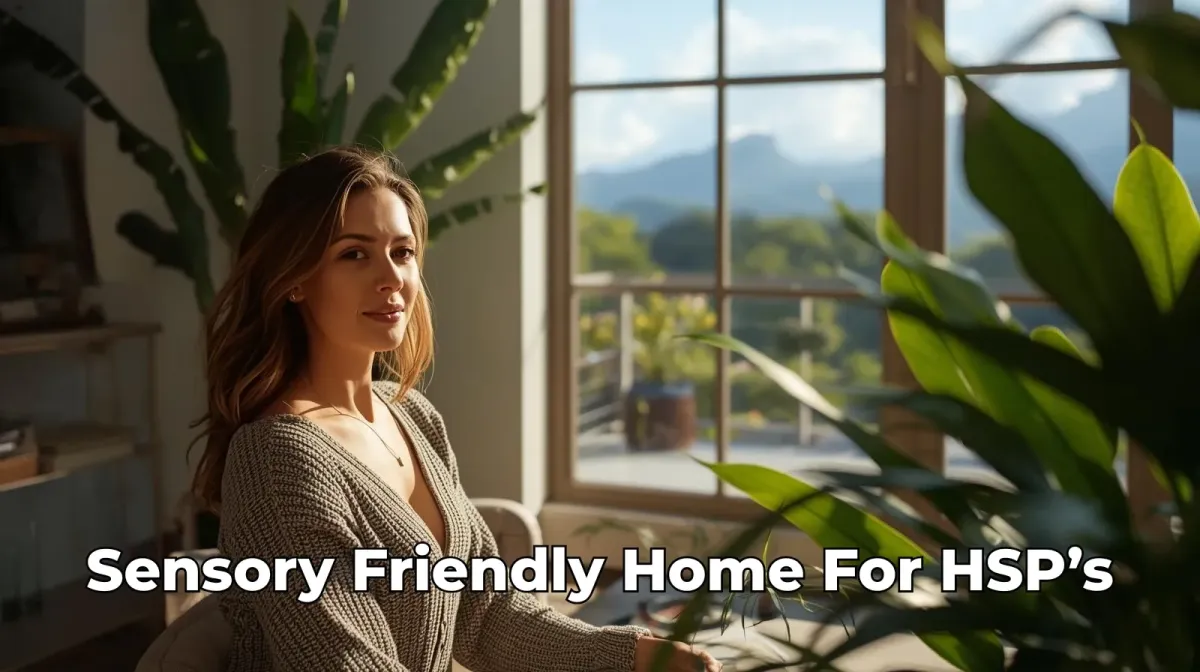
Sensory-Friendly Home for HSPs: Light, Noise, and Nervous-System Ease
For many highly sensitive people, the outside world is already intense.
Noise.
Speed.
Expectation.
Emotional demand.
So when home doesn’t offer relief, the nervous system never truly rests.
You may notice that at home you still feel:
On edge
Drained
Irritable
Unable to settle
Not because something is “wrong” with you — but because your environment is quietly overstimulating your system.
For HSPs, the home is not just a living space.
It is a regulation space.
This article explores how light, noise, and sensory input affect sensitive nervous systems — and how to create a sensory-friendly home that supports ease rather than depletion.
It sits within the wider framework of
What Is a Highly Sensitive Person? A Complete Guide and is written for HSPs who want calm without perfectionism.
Why Home Matters So Much for HSPs
Highly sensitive people process sensory input more deeply.
This includes:
Light
Sound
Visual clutter
Temperature
Movement
In public spaces, HSPs often brace themselves.
At home, the nervous system expects to stand down.
When that doesn’t happen, exhaustion builds.
This is why many HSPs feel tired even after “doing nothing”.
The system never fully switches off.
A Sensory-Friendly Home Is Not About Minimalism
Many HSPs worry that creating a calm home means:
Stripping everything back
Living like a monk
Having a perfectly curated space
That’s not the goal.
A sensory-friendly home is not about style.
It’s about how your body feels when you walk through the door.
Ease over aesthetics.
The Nervous System and Environmental Load
From a nervous-system perspective, every environment sends signals:
Is it safe here?
Is it demanding?
Do I need to stay alert?
Light, noise, and clutter can all signal:
“Stay switched on.”
For HSPs, this signalling is amplified.
This is why regulation strategies often fail if the environment keeps activating the system — a theme that overlaps with Polyvagal Basics for Sensitive People.
Environment comes before technique.
Light: One of the Biggest Hidden Stressors
Why Light Affects HSPs So Strongly
Many HSPs are sensitive to:
Harsh overhead lighting
Cool or blue-toned bulbs
Flicker (even when others can’t see it)
Bright, artificial light increases:
Alertness
Eye strain
Nervous-system arousal
This is helpful at work — but exhausting at home.
Gentle Lighting Adjustments That Help
You don’t need to replace everything.
Small changes matter.
Consider:
Warm-toned bulbs instead of cool white
Lamps rather than overhead lights
Dimmer switches where possible
Turning lights off earlier in the evening
Soft lighting tells the nervous system:
“You can slow down now.”
This supports attention and energy regulation explored in
HSP Attention Under Pressure: Focus, Fatigue, and Gentle Strategies
Noise: The Invisible Drain
Why Noise Is So Depleting for HSPs
Noise isn’t just volume.
It’s:
Unpredictability
Frequency
Layering
Background noise that others tune out may keep an HSP nervous system on constant alert.
This includes:
TVs on “for company”
Appliances
Traffic hum
Neighbours
Sudden sounds
Over time, this leads to fatigue rather than obvious stress.
Creating a Quieter Sound Environment
You don’t need silence.
You need control and predictability.
Helpful steps include:
Turning off background noise when not actively listening
Using soft, familiar sounds (music, nature) intentionally
Closing doors between sound sources
Using rugs, curtains, or soft furnishings to absorb sound
Quiet supports emotional recovery, especially for HSPs prone to overwhelm, as explored in
Overwhelm Recovery Routines for HSPs.
Visual Clutter and Cognitive Load
Why “Mess” Feels Different for HSPs
Clutter isn’t just visual.
For HSPs, it creates:
Decision fatigue
Mental noise
A sense of unfinished business
Every object becomes a signal.
This is why some HSPs feel overwhelmed in busy rooms even when nothing is happening.
Gentle Decluttering (Without Extremes)
This is not about minimalism.
It’s about visual rest.
Start small:
One surface
One corner
One drawer
Ask:
“Does my eye get to rest here?”
Visual calm supports emotional regulation and reduces people-pleasing pressure, explored in
People-Pleasing Recovery for HSPs: Kind No Without Guilt.
Creating Sensory Zones Rather Than Perfect Rooms
A common mistake is trying to make the whole home calm.
That’s unrealistic.
Instead, create zones.
For example:
One quiet chair
One dimly lit corner
One noise-reduced room
Your nervous system only needs one reliable place to settle.
This is especially helpful for HSPs who feel emotionally lonely or unseen, as explored in
HSP Emotional Loneliness: Why You Can Feel Lonely in a Crowd.
The Role of Texture and Touch
HSPs often respond strongly to tactile input.
Helpful textures include:
Soft fabrics
Natural fibres
Weighted blankets
Supportive seating
Uncomfortable textures can keep the system alert without you realising why.
Comfort is not indulgence.
It’s regulation.
Smell and Subtle Sensory Load
Smell is a powerful nervous-system trigger.
Strong or synthetic scents can:
Increase headaches
Create agitation
Trigger fatigue
If you’re sensitive:
Reduce artificial fragrances
Open windows regularly
Use familiar, gentle scents sparingly
Neutral is often better than “relaxing”.
When Home Is Shared With Others
Many HSPs don’t live alone.
This adds complexity.
You may feel guilty asking for:
Quieter evenings
Dimmer lights
Less background noise
But these needs are not preferences.
They are regulation supports.
Framing requests around nervous-system needs — not personal criticism — often helps.
Boundaries here link closely with HSP Relationship Triggers: Regulation First.
Sensory-Friendly Doesn’t Mean Rigid
A sensory-friendly home is flexible.
It adapts to:
Energy levels
Stress cycles
Life changes
Some days you’ll tolerate more.
Other days you won’t.
Listening to this variability builds self-trust rather than control.
The Long-Term Effect of a Sensory-Friendly Home
Over time, many HSPs notice:
Better sleep
Less irritability
Improved focus
Reduced emotional reactivity
More capacity for connection
These changes often feel subtle — but they accumulate.
Flourishing is usually quiet.
Next steps
You do not need to redesign your whole home.
Start with the place where you spend the most time or the part of your environment that creates the most noticeable strain.
That might mean changing one harsh light, reducing background noise, clearing one visually busy surface or creating one corner where your body can reliably settle.
Make one change and notice what happens.
The aim is not to create a perfectly calm environment. It is to reduce unnecessary sensory load so that your nervous system does not have to work quite so hard simply to be at home.
Understand Your Sensitivity More Deeply
If sensory overload at home is part of a wider pattern of overwhelm, fatigue, emotional intensity or needing more recovery time than the people around you, continue with the Highly Sensitive People HSP Hub.
It brings together further guidance on overstimulation, boundaries, relationships, emotional resilience, work and everyday life as a highly sensitive person.
You do not need to make yourself tolerate every environment equally well.
Understanding what your sensitive system responds to allows you to make thoughtful adjustments where you can and protect more of your energy for the parts of life that matter.

Sensory-Friendly Home for HSPs: Frequently Asked Questions
Why does my home feel overwhelming even when nothing is happening?
Because sensory input may still be activating your nervous system.
Do I need to redesign my whole home?
No. One or two regulated spaces are enough.
Is it selfish to prioritise my sensory needs?
No. It’s responsible self-care for a sensitive nervous system.
What if others in my home don’t understand?
Start with small changes in your own space.
Can a sensory-friendly home reduce anxiety and fatigue?
Yes. Environment strongly influences regulation.
Further Reading
If your environment constantly overstimulates you, these articles explore how external spaces shape internal safety:
HSP Attention Under Pressure: Focus, Fatigue, and Gentle Strategies
Sensitivity as a Trait, Not Trauma: A Clear, Kind Explanation
HSP and Perimenopause: Sensitivity, Sleep, and Emotional Waves
Polyvagal in Daily Life: Safety Cues at Home, Work, and Relationships
HSP Emotional Loneliness: Why You Can Feel Lonely in a Crowd
I look forward to connecting with you in my next post.
Until then, be well and keep shining.
Peter. :)