Peter Paul Parker's Official Website
Articles And Guidance
Grief in the Body: Breath, Movement, and Gentle Rituals
Grief is not only an emotion — it is a whole-body experience. When loss touches us, the nervous system contracts, the breath shortens, and energy stagnates. Muscles hold the weight of sorrow, and the chest often feels heavy or constricted.
In Traditional Chinese Medicine (TCM), grief is associated with the lungs. When unexpressed, grief becomes stuck, leading to tightness in the chest, shallow breathing, fatigue, or depression.
Modern trauma research confirms this view: emotions that are not released remain in the body, shaping how we feel and respond to life.
See the Emotional Healing Complete Guide for a wider framework of recovery.
How Unprocessed Grief Shows Up in the Body
Unreleased grief may manifest as:
Tightness or pressure in the chest
Shortness of breath or shallow breathing
Persistent fatigue or low energy
Slumped posture or heaviness in the shoulders
Digestive discomfort or loss of appetite
Emotional numbness or unexpected outbursts
These are not signs of weakness — they are signs that grief is being held in the body, waiting for gentle release.
For related symptoms, see Emotional Trauma Symptoms Checklist for Adults.
The Nervous System and Grief
Grief can keep the nervous system stuck in Root Brain, where survival responses dominate. Sometimes it triggers Fire Brain, leading to irritability or anger.
Healing practices such as breathwork, Qi Gong, and ritual guide us back into Flow Brain, the state of calm presence where grief can soften into acceptance.
Breath Work for Grief
Breath is the most direct way to release grief from the lungs. Trauma often shortens breath, keeping emotions suppressed. Conscious breathing reverses this pattern.
1. Abdominal Breathing
Place your hands on your belly. Inhale deeply through the nose, feeling the abdomen expand. Exhale slowly, softening the belly. Continue for 3–5 minutes.
2. Sighing Breath
Inhale through the nose. Exhale through the mouth with a long sigh, imagining heaviness leaving your chest. Repeat 5–10 times.
3. Box Breathing
Inhale 4, hold 4, exhale 4, hold 4. This steadies the nervous system and creates emotional space.
See Box Breathing for Trauma: A 5-Minute Nervous System Reset.
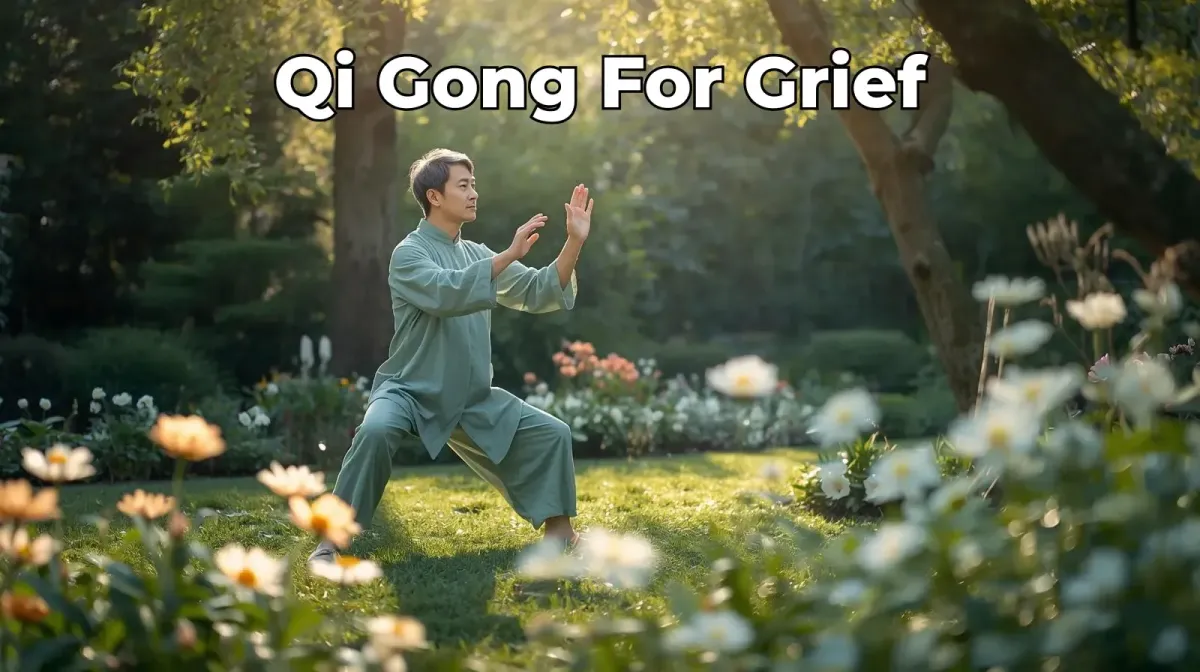
Qi Gong for Grief Release
Qi Gong combines breath and movement to restore energy flow. For grief, focus on movements that open the chest and lungs.
1. Lung Healing Sound
Stand tall. Inhale, raising arms to the side. Exhale with the sound “Sssss,” imagining sadness leaving your lungs.
2. Embracing the Tree
Stand with feet hip-width apart, arms rounded as if holding a tree. Breathe deeply into the chest. This posture expands lung capacity and calms the mind.
3. Shaking the Body
Shake arms, legs, and torso gently for 1–2 minutes to release tension and stagnant Qi.
See Qi Gong for Emotional Healing: Move, Breathe, Release for more practices.
Gentle Rituals for Grief
Ritual gives grief a container — a safe space for expression and release. Even simple practices can create profound shifts.
Lighting a candle in memory of a loved one
Journaling a letter to express what was left unsaid
Nature walks to release grief into the elements
Creating a small altar with photos or objects of remembrance
Sound rituals such as humming or chanting to vibrate the lungs free of heaviness
For guided reflection, see 100 Inner-Child Journaling Prompts for Healing.
Shadow Work and Grief
Sometimes grief is complicated by suppressed anger, guilt, or shame. Shadow work helps bring these hidden emotions into the light, where they can be acknowledged and integrated.
Questions to explore:
“What part of my grief am I avoiding?”
“What emotions do I judge as unacceptable?”
See What Is Shadow Work? A Guide to Healing and Transformation.
Grief and the Inner Child
Many adults find that grief reawakens childhood wounds of abandonment or loss. Reparenting the inner child helps create safety in the midst of sorrow.
Affirmations: “You are safe to grieve. You don’t have to carry this alone. I am here with you.”
See Inner-Child Healing: A Gentle Step-by-Step Guide.
A Daily Grief-Release Routine
Here’s a 15-minute practice you can use:
3 minutes abdominal breathing
3 minutes shaking the arms, legs, and torso
3 minutes lung sound healing (“Sssss”)
3 minutes journaling about today’s emotions
3 minutes gentle ritual (light a candle, hum, or walk outside)
This combination supports nervous system regulation, Qi flow, and emotional expression.
Final Thoughts
Grief affects more than our thoughts.
It can change the way we breathe, move, sleep, concentrate and experience our bodies. Gentle practices such as movement, breathing, journalling and meaningful ritual can give grief somewhere to be expressed without demanding that you resolve it before you are ready.
You do not need to use every practice in this article.
Choose the one that feels most supportive and allow yourself to return to it when you need it.
Understand Emotional Healing More Deeply
If you would like a broader framework for understanding grief, emotional wounds, nervous-system responses and the different approaches that can support recovery, continue with the Emotional Healing & Emotional Trauma: The Complete Guide.
It brings together grounding, emotional regulation, body-based practices, journalling and other approaches so you can understand where each practice fits within the wider process of emotional healing.
Grief does not follow a fixed timetable, and there is no requirement to turn loss into a lesson or move on before you are ready.
If grief feels overwhelming, remains extremely difficult to manage, significantly affects everyday functioning or is accompanied by persistent depression, hopelessness or thoughts of harming yourself, seek appropriate support from your GP, a qualified mental-health professional or a specialist bereavement service.
Gentle self-guided practices can support you through grief, but you do not have to carry severe or persistent distress alone.

Grief in the Body: Frequently Asked Questions
1. Why does grief affect the lungs in TCM?
Because grief contracts lung Qi, leading to tightness, shallow breathing, and fatigue. Releasing the breath restores balance.
2. Can Qi Gong really help with grief?
Yes. Movements that open the chest and regulate breath directly support the lungs and nervous system.
3. How long does grief last in the body?
Grief has no timeline. But when expressed through safe practices, its intensity softens over time.
4. What rituals are best for releasing grief?
Simple, meaningful actions — like lighting a candle or writing a letter — allow grief to flow instead of staying stuck.
5. How does shadow work help with grief?
It helps uncover hidden emotions like guilt or anger that often accompany grief, making the healing more complete.
I look forward to connecting with you in my next post.
Until then, be well and keep shining.
Peter. :)

Cornerstone Articles




Do You Need A Clearer Next Step? 🢂
You do not need to know exactly what kind of support you need before exploring what is available. If your experience feels more connected with spiritual disconnection, sensitivity, intuition, awakening or a deeper desire to reconnect with yourself, you can begin by learning about the Soul Reconnection Call.
If you are looking for support with emotional patterns, shadow work, self-image or personal change — or would prefer to begin with a structured course — you can explore the available coaching and course pathways.
Free Tools
Shadow Work
Emotional Healing
Spiritually Lost
Explore
Free Tools


Copyright Peter Paul Parker 2023 <<< ✺✺✺✺✺✺✺✺✺✺✺✺✺✺✺✺✺✺✺✺✺ >>> Terms And Conditions - >>> Privacy - Linked In - YouTube - Facebook -