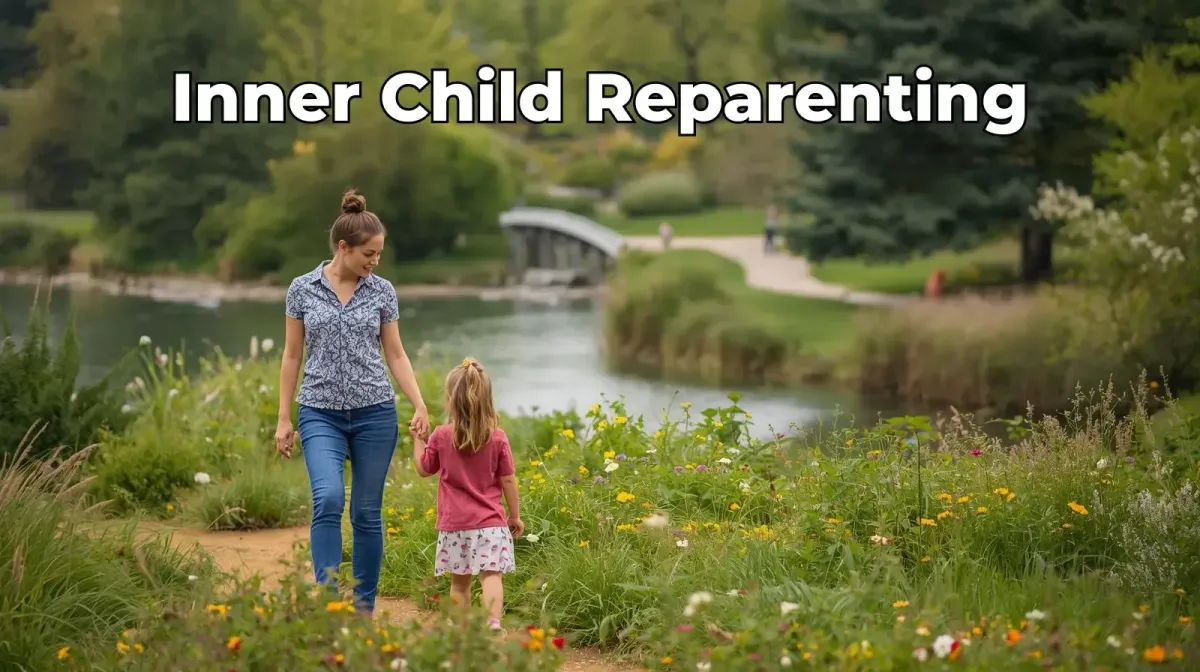
Inner Child Reparenting for HSPs: Gentle Steps to Feel Safer, Seen and Soothed
If you’re highly sensitive, old hurts can echo loudly in everyday moments—criticism stings, silence feels like rejection, a look sends your system into overdrive. Inner child reparenting offers a kind path: you meet the younger parts of you with warmth, give them the attunement they missed, and take tiny present-day actions that prove “I’m safe enough now.” No re-enacting or forcing—just short, body-first practices that stay inside your window of tolerance.
Below is a simple, repeatable map—Settle → See → Soothe → Support → Step—plus scripts, a 7-day plan, and common pitfalls to avoid.
New here? Skim the cornerstone first: Emotional Healing and Emotional Trauma: The Complete Guide.
For context on tender work, see Shadow Work and the Inner Child: Healing the Wounds You Carry Within.
Safety first (always titrate)
Practise for 3–7 minutes. If you feel numb, spiky or foggy, stop kindly and ground (temperature shift, orient to three objects, long exhale).
Lead with the body: 60–90 seconds of shake/sway or in 4, out 6 breathing before inner work.
Journal lightly: I feel… I need… One tiny step… End while calm—we’re wiring safety, not chasing breakthroughs.
60–90s pre-check: 4–6 calm breaths on the Breathing Pacer → if you’re out of range, take a 2-Minute Body Reset → one line in your Meraki Healing Journal. Then continue.
The 5-Step Reparenting Loop (2–6 minutes)
1) Settle (30–60s)
Feel your feet. Long mouth exhale ×3. Whisper: “It’s safe to feel a little.”
2) See (30–60s)
Notice the trigger and name the age/part: “A seven-year-old part in me feels scared of getting it wrong.” If you’re unsure, say “a younger part.”
3) Soothe (60–90s)
Hand on chest/belly, breathe in 4, out 6. Add a kind line:
“Of course this feels big.”
“I’m here now. I won’t leave.”
“You don’t have to earn rest.”
4) Support (30–60s)
Offer what a good caregiver might give: warmth, permission, structure.
“We can pause.”
“Let’s do this together, slowly.”
“You’re allowed to be new at things.”
5) Step (30–60s)
Take one tiny present-day action that proves safety: sip water; postpone the tricky reply; send a “good-enough” draft; ask for a clear deadline. End with one long exhale.
If intensity spikes at any point, return to Settle (temperature + orienting) and try again later for 60–90 seconds.
(If breath is included, open the Breathing Pacer for 3–5 gentle cycles.)
Close while calm: one honest line in your Meraki Healing Journal — “Right now my younger part needs ___; I can offer ___.”
Would You Like To Understand The Childhood Patterns Behind What You Are Feeling?
As you begin reconnecting with younger parts of yourself, you may start recognising connections between earlier emotional experiences and the way you respond to situations today.
If you would like to understand those connections more deeply, my free Emotional Childhood Wounds Webinar explores how earlier emotional experiences may continue to influence thoughts, emotional reactions, relationships and protective patterns in adult life.
I also introduce the Dream Method as a compassionate framework for understanding what you discover.
Watch The Free Emotional Childhood Wounds Webinar

Micro-scripts (borrow and adapt)
When perfection panic hits:
“Hi love, you’re scared we’ll be criticised. I’m here. We’ll send a good-enough draft and review later.”When rejection alarm fires:
“Ouch—that felt like being left out. I see you. Let’s text one person we trust and take a short walk.”When guilt appears after a boundary:
“It’s okay to disappoint sometimes. We chose care and self-respect. I’m proud of us.”When shutdown starts:
“You want to disappear to stay safe. Thank you. Let’s stand up for 60 seconds and breathe together.”
Keep it tiny: pick two items and pair them with a 2-Minute Body Reset when emotions spike.
Somatic add-ons that help it land (90–120s each)
Humming exhale: gentle “mmm” on the out-breath to soften shame and looping thoughts.
Brush down: lightly brush arms/torso/legs top-to-bottom; seal hands on lower belly.
Glimmer soak: receive one neutral/pleasant cue (light on a leaf, warm mug) for 30–60s after your script.
“Good Parent” habits (tiny behaviours that rewire)
Predictable rhythms: same lights-out window; regular meals; two-minute movement breaks.
Clear edges: one-sentence boundary and a meeting hard stop at :50.
Repair rituals: if you snap, own it kindly and offer a do-over: “I was stressed; let me try that again.”
Save three warm, clear lines in the Boundary Script Builder so they’re ready when needed.
A 7-Day HSP Plan (6–10 minutes/day)
Day 1: Run the 5-step loop after a mild wobble; end while calm.
Day 2: Add humming exhale before your kind line; choose one tiny step.
Day 3: Reparent a work moment (deadline anxiety): soothe + send a good-enough draft.
Day 4: Reparent a relationship moment (slow reply): soothe + send a clear, kind check-in.
Day 5: Build a comfort kit (warm layer, water, soothing scent, grounding card with your script).
Day 6: Pair reparenting with a cue (after tea / before inbox).
Day 7: Review: which phrase or action softened things fastest? Keep the smallest one that worked and schedule it next week.
Add your daily 60–90s reparenting check-in to the Morning Ritual Builder so it actually happens.
Troubleshooting
“I can’t picture the child.” No problem—work with sensations and the phrase “a younger part in me.”
“It gets intense quickly.” Shorten to 60–90 seconds; keep it protector-focused (calm the Pleaser/Perfection Guardian) and avoid deep dives for now.
“It feels cheesy.” That’s a protector. Thank it, lower the volume (10% warmth), and try again.
Trauma history? Stay brief and body-led. Stop if you spike or go numb; pair with therapeutic support for deeper layers.
Still wired or flat? Run the pre-check: Breathing Pacer → 2-Minute Body Reset → one line in the Meraki Healing Journal, then retry for 60–90s.
Next Steps
If the practices in this article have helped you recognise a younger part of yourself behind present-day fear, shame, perfectionism, rejection sensitivity or people-pleasing, you do not need to uncover your entire childhood story at once.
The next step is to explore that pattern gently and with enough structure that you can remain grounded while you do it.
Explore Inner Child Shadow Work
Begin with Inner Child Shadow Work: Meet the Part That Still Hurts.
This focused mini-course helps you explore how earlier emotional experiences may still influence the way you react, protect yourself and relate to other people today.
It gives you a structured way to meet those younger parts with greater awareness and compassion while keeping the work paced and manageable.
Go Deeper With Structured Shadow Work
If inner-child patterns connect with other recurring themes such as shame, people-pleasing, anxiety, emotional triggers, attachment wounds or harsh self-criticism, continue with the Shadow Work Online Course.
The course provides a broader step-by-step pathway for understanding how these patterns connect and working with them gradually through regulation, awareness and integration.
Explore One-to-One Support
If you already understand some of your childhood patterns but still find the same reactions repeatedly taking over in relationships or everyday situations, you can explore One-to-One Coaching.
This gives us space to look more personally at what activates the younger parts of you, what they may still be trying to protect you from and how you can respond from the present rather than automatically repeating an old survival pattern.
If inner-child work repeatedly brings up intense trauma memories, flashbacks, dissociation or distress that is difficult to settle, pause the deeper self-guided work and consider support from an appropriately qualified mental-health or trauma professional.
The aim is not to force yourself back into the past.
It is to help the parts of you shaped by the past feel safer in the life you are living now.

Frequently Asked Questions: Inner Child Reparenting (HSP Edition)
Will this open a flood of old memories?
Not with titration. We’re meeting present-day activations for a few minutes and ending while calm. Depth can come later, gently.
Do I need to find my “core wound” first?
No. Safety first. The 5-step loop during small wobbles builds trust so bigger moments become workable.
What if I feel silly talking to myself?
Use third-person or present-day language: “A younger part in me is scared.” Keep tone warm and simple.
How quickly should I expect change?
Often within 2–3 minutes—shoulders drop, jaw softens, breath lengthens. Consistent tiny reps compound.
Further Reading
Inner Child Reparenting with the Dream Method
Emotional Healing with the Dream Method
Self-Compassion for HSPs: Soften Shame and Build Inner Safety
2-Minute Body Resets (Save-and-Use Toolkit) for HSPs
Boundaries for HSPs: Warm, Clear and Kind
If parts feel tangled, try IFS (Parts Work) for HSPs: Befriend Your Inner Team.
Track state as you go: Somatic Tracking for HSPs.
Quick Tools (use today)
Meraki Healing Journal
Morning Ritual Builder
Breathing Pacer (Box / 4-7-8)
Boundary Script Builder
I look forward to connecting with you in my next post.
Until then, be well and keep shining.
Peter. :)