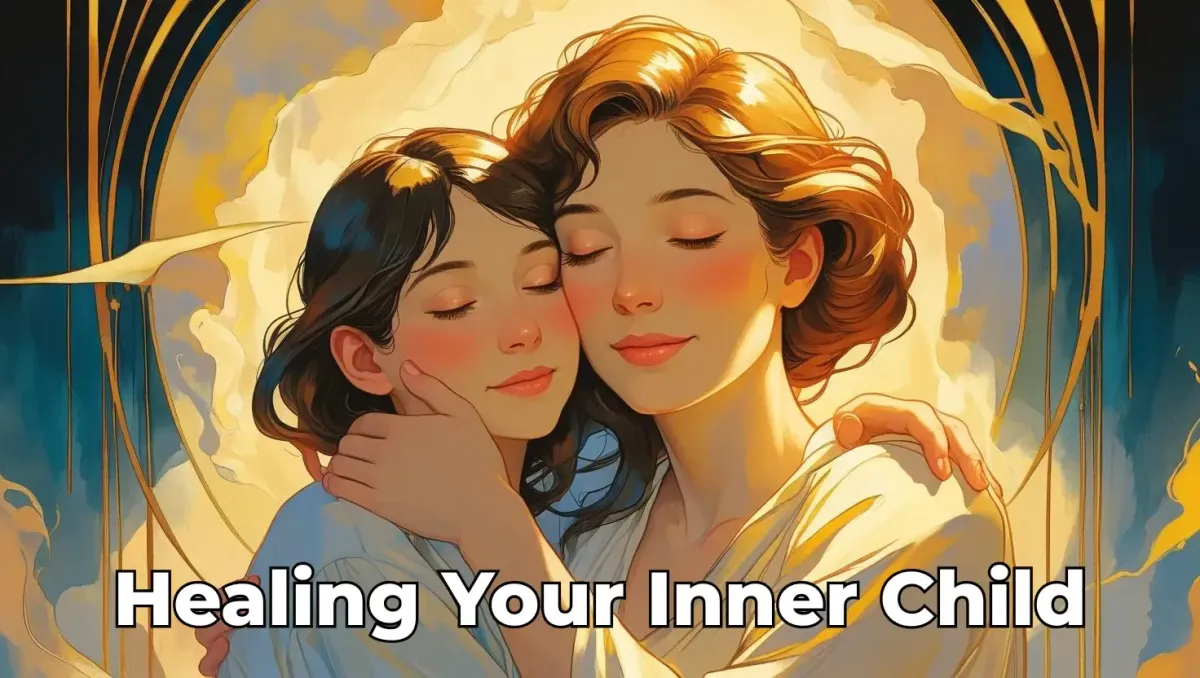
Shadow Work and the Inner Child Explained
Shadow work and the inner child are deeply connected.
When people begin exploring shadow work, they often discover that their strongest emotional reactions are rooted in earlier life experiences. These younger parts of us do not disappear with age. They move into the shadow.
If you are new to this work, begin with What Is Shadow Work? A Complete Guide. That cornerstone article explains how the shadow forms and why hidden emotional patterns continue to shape adult behaviour.
The inner child lives inside that shadow.
Understanding this connection helps you make sense of adult triggers, relationship patterns, and recurring feelings of shame or self-doubt.
This article focuses on awareness, what the inner child is, how it forms, and why shadow work naturally brings it forward.

What Is the Inner Child?
The inner child is not a sentimental idea.
It refers to the emotional memory of your younger self — the part of you shaped by early experiences of love, fear, confusion, or rejection.
This part carries:
Unmet needs for safety, reassurance, or belonging
Unprocessed emotions such as anger, grief, or fear
Core beliefs like “I am not enough” or “I must earn love”
Children adapt quickly. If expressing anger led to criticism, you may have learned to suppress it. If asking for help led to dismissal, you may have learned to become self-reliant too early.
These adaptations were intelligent at the time.
But when they remain unconscious, they move into the shadow.
If this idea feels familiar and you would like to explore it more gently, Meeting Your Inner Child: A Gentle Guide To Healing Early Wounds looks more closely at how you can begin recognising and relating to these younger emotional parts without forcing the process.
How Childhood Wounds Move Into the Shadow
The shadow forms when parts of us feel unsafe to express.
If you were praised for being “easy” or “good,” you may have hidden anger. If love felt unpredictable, you may have developed hyper-vigilance. If conflict felt dangerous, you may have become a people-pleaser.
Over time, these patterns become automatic.
You may recognise similar themes in:
Each of these patterns often traces back to early emotional conditioning.
Shadow work does not blame childhood. It brings understanding to how it shaped you.
For a broader understanding of how childhood experiences can shape adult patterns, you can step back from the shadow-work perspective and explore the common emotional and relational patterns that may develop from earlier experiences.
How the Inner Child Shows Up in Adult Life
The inner child often appears during emotional intensity.
You might notice:
Overreacting to small triggers
Feeling unusually small or powerless
Strong fear of abandonment
Self-criticism after minor mistakes
Guilt when setting boundaries
These reactions are rarely random.
They are often younger emotional states being activated in present-day situations.
Relational triggers are especially powerful. You may see this dynamic explored further in Shadow Work and Relationships.
When you understand that these responses are rooted in earlier experiences, self-blame softens.
Awareness replaces confusion.
If you are beginning to recognise some of these patterns in your own life, my free Emotional Childhood Wounds Webinar takes this exploration further. It looks at how earlier emotional experiences may continue to influence the way you think, feel and respond in adulthood, and introduces the Dream Method as a gentle framework for understanding what you discover.


Why Shadow Work Brings the Inner Child Forward
Shadow work invites you to look at what has been hidden or suppressed.
When you do that, the inner child often emerges naturally.
If the language of younger or protective parts resonates with you, IFS vs Shadow Work: What’s the Difference? explains where parts-based Internal Family Systems and shadow work overlap, where they differ, and why they should not be treated as the same approach.
This does not mean you must relive painful memories. It means you begin recognising how early emotional experiences shaped your identity and nervous system.
For sensitive people, this connection can feel especially strong. Emotional absorption in childhood can intensify inner child patterns later in life.
If you are new to shadow exploration, it is important to pace yourself. Read Shadow Work Safety: Myths, Risks and Red Flags to understand how to approach this work gently.
Awareness must feel steady, not overwhelming.
Awareness Comes Before Healing
Many people immediately search for ways to “heal the inner child.”
But healing without awareness can lead to emotional flooding or frustration.
Before going deeper, it helps to understand:
How your shadow formed
What situations activate younger emotional states
How your nervous system responds under stress
If you want a calm introduction to shadow exploration, the Shadow Work Online Course offers structured guidance without overwhelm.
If you are specifically looking for step-by-step inner child healing practices, read Healing the Inner Child Through Shadow Work. That article focuses on practical integration.
This page is about clarity.
Healing becomes more effective once clarity is established.
The Gifts of Inner Child Awareness
When you understand how the inner child lives within your shadow, something shifts internally.
You begin to:
Respond instead of react
Soften self-criticism
Set boundaries with less guilt
Recognise triggers as information
Feel less shame about emotional intensity
These shifts do not require force.
They grow from steady awareness.
Shadow work is not about erasing your past. It is about understanding how it shaped you so you can live more consciously now.
When to Go Deeper
If this article has helped you recognise strong inner child patterns, structured support can help you move forward steadily.
The Inner Child Shadow Work Course explores these themes in greater depth.
For those wanting a broader emotional foundation first, the Shadow Work Foundation Bundle provides a paced progression through core shadow themes.
Growth works best when it feels stable.
Next Steps
Recognising the connection between your inner child and your present-day emotional patterns can bring a great deal into awareness. You do not need to understand or change everything at once.
If you would like to explore how earlier emotional experiences may still be affecting you today, begin with my free Emotional Childhood Wounds Webinar.
It will help you look more closely at childhood emotional wounds, the adult patterns they may contribute to, and how the Dream Method can provide a compassionate framework for moving forward.
Would You Like Personal Support With What You Are Discovering?
Sometimes understanding where a pattern began can bring a great deal of clarity, but changing the way you respond in your present-day life can still take time and practice.
If you would like individual support exploring inner child patterns, people-pleasing, boundaries, emotional triggers, relationship difficulties, self-worth or behaviours that keep repeating, One-to-One Coaching gives you space to work with those patterns in the context of your own life.

Shadow Work Videos
Prefer to learn by watching? This short, gentle series gives you the essentials. Clear. Trauma-aware. HSP-friendly. Start here, then come back to the article when you’re ready.
What Is Shadow Work — a simple overview and why it matters.
Shadow Work for Beginners — safe first steps and common mistakes to avoid.
Shadow Work Journaling Prompts - What and how to prompt for shadow work.
Shadow Work for Empaths and HSP's - A sensitive guide to shadow work.
5 Signs You Need Shadow Work - Simple signs to see if you need shadow work.
Shadow Work For Healing Trauma - A gentle guide that is trauma aware.
Take your time. Pause when you need. Save the playlist and revisit whenever you want a calm refresh. More videos will be added soon.

Further Reading On Shadow Work
Discover the meaning of shadow work, why it matters, and how it can transform your life by helping you embrace every hidden part of yourself.
Gentle, compassionate approaches to integrating trauma through shadow work without overwhelming your system.
Understand how shadow work helps you soften self-criticism, release shame, and embrace authentic self-love.
Shadow work and inner child healing both come from depth psychology traditions. These sources explain the shadow concept and emotional safety considerations from recognised psychological organisations.
Verywell Mind — Shadow Work: How to Practice, Goals, and Challenges
https://www.verywellmind.com/what-is-shadow-work-exactly-8609384
Healthline — Shadow Work: Benefits, How To, Practices, and Dangers
https://www.healthline.com/health/mental-health/shadow-work
The Society of Analytical Psychology (UK) — The Jungian Shadow
https://www.thesap.org.uk/articles-on-jungian-psychology-2/about-analysis-and-therapy/the-shadow/
Shadow Work And The Inner Child: Frequently Asked Questions
What is the connection between shadow work and the inner child?
Shadow work brings unconscious emotional patterns into awareness. Many of those patterns originate in childhood experiences, which is why the inner child often becomes visible during shadow exploration.
Does this mean my childhood was traumatic?
Not necessarily. Even subtle emotional dynamics can shape beliefs and coping strategies. Shadow work focuses on understanding impact rather than assigning blame.
Why do adult triggers feel younger than my age?
Emotional triggers often activate memories stored in the nervous system. When you feel “small” or powerless, it may reflect an earlier imprint rather than the present situation alone.
Do I need to revisit painful memories?
No. Shadow work focuses on present patterns and emotional awareness. It is not about forcing yourself to relive every detail of the past.
I look forward to connecting with you in my next post.
Until then, be well and keep shining.
Peter. :)