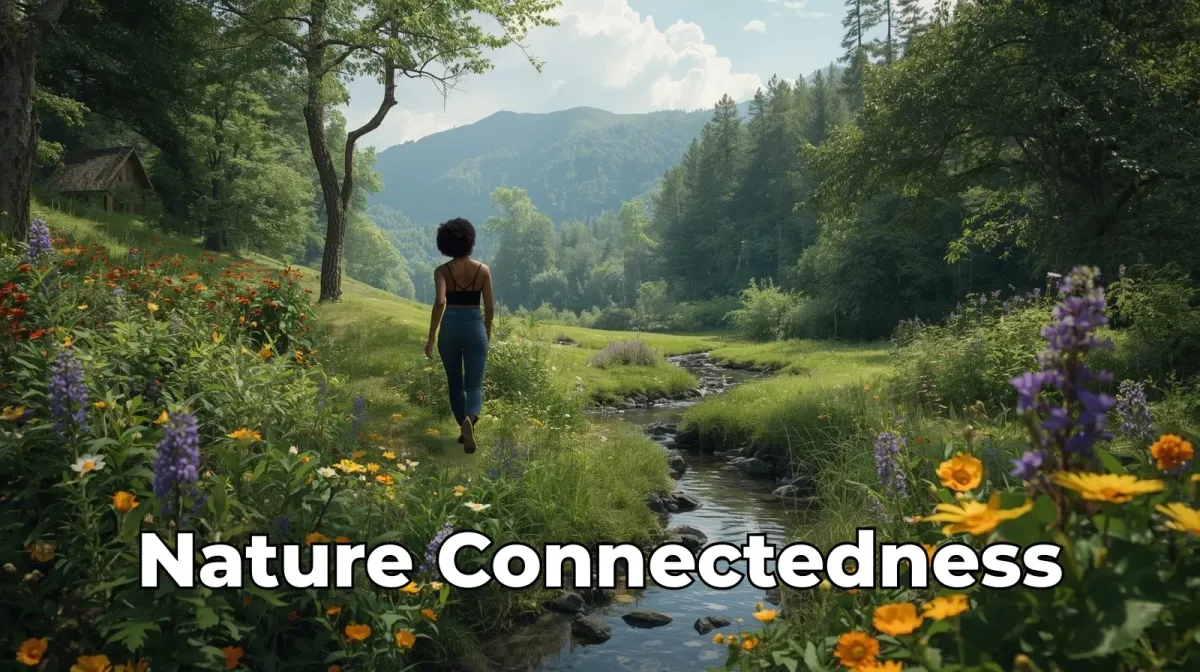
Nature Connectedness for HSP Flourishing in Midlife
For many highly sensitive people, midlife brings a quiet but profound shift.
What once felt manageable starts to feel too loud.
Crowded spaces drain faster.
Artificial rhythms exhaust rather than stimulate.
The nervous system asks — more insistently — for something real.
Often, that “something” is nature.
Not as a hobby.
Not as an escape.
But as a regulatory, relational, and restorative necessity.
This article explores why nature connectedness becomes especially important for HSPs in midlife — and how it supports flourishing rather than mere coping.
It sits within the wider framework of What Is a Highly Sensitive Person? A Complete Guide and is written for sensitive people who are no longer interested in pushing through — only in living well.
Why Midlife Changes Sensitivity for HSPs
Highly sensitive people don’t suddenly become sensitive in midlife.
But many notice that their tolerance for artificial pace decreases.
This can be due to:
Cumulative nervous-system load
Hormonal shifts
Long-term emotional labour
Years of masking or adapting
Reduced recovery capacity
What once could be overridden now demands attention.
This is not weakness.
It is biological honesty.
Midlife often marks the point where the body stops negotiating.
Nature as Regulation, Not Recreation
For HSPs, nature is not just pleasant.
It is regulating.
Natural environments provide:
Predictable rhythms
Non-intrusive sensory input
Soft focus
Reduced social demand
Unlike built environments, nature does not ask you to perform.
It allows the nervous system to settle without effort.
This is why many HSPs feel relief before they even consciously relax.
The Nervous System and Natural Environments
From a nervous-system perspective, nature offers several stabilising signals:
Fractal patterns that soothe visual processing
Organic soundscapes that reduce vigilance
Spaciousness that allows orienting without threat
Rhythms that support parasympathetic tone
This is especially important for HSPs whose attention and energy are easily depleted under pressure, explored in HSP Attention Under Pressure: Focus, Fatigue, and Gentle Strategies
Nature restores capacity without demanding effort.
Why Midlife HSPs Often Feel “Called” Back to Nature
Many sensitive people report a pull toward nature in midlife.
This isn’t nostalgia.
It’s regulation-seeking.
After decades of:
Urban environments
Digital saturation
Emotional responsibility
Social complexity
the nervous system recognises what supports it best.
Nature offers:
Slower time
Non-verbal connection
Sensory coherence
For HSPs, this feels like coming home.
Nature Connectedness vs Nature Consumption
Nature connectedness is not the same as:
Scenic travel
Outdoor achievement
Constant stimulation
For HSPs, too much novelty can be as draining as too much noise.
Connectedness is about:
Familiarity
Relationship
Repetition
The same park.
The same tree.
The same path.
Depth over novelty.
Emotional Loneliness and Nature
Many HSPs experience emotional loneliness in midlife — even with relationships.
Nature can help soften this.
Not by replacing human connection — but by offering non-demanding presence.
In nature:
You don’t have to explain yourself
You don’t have to regulate others
You don’t have to perform
This supports emotional repair explored in
HSP Emotional Loneliness: Why You Can Feel Lonely in a Crowd.
Nature meets you where you are.
Nature as a Boundary Ally for HSPs
Midlife often brings boundary clarity.
What once felt negotiable no longer does.
Nature helps HSPs:
Clarify limits
Reduce people-pleasing
Honour energy rhythms
Time in nature often strengthens inner “no” without confrontation.
This supports patterns explored in
People-Pleasing Recovery for HSPs: Kind No Without Guilt.
Boundaries become embodied, not argued.
Gentle Ways to Cultivate Nature Connectedness in Midlife
Nature connection does not require big changes.
For HSPs, consistency matters more than intensity.
1. Choose One Regular Natural Space
A familiar place builds safety.
This could be:
A local park
A woodland path
A riverside walk
A garden or allotment
Returning to the same place allows the nervous system to settle more quickly.
2. Go at the Same Time of Day
Routine supports regulation.
Walking at the same time:
Reduces decision fatigue
Builds rhythmic expectation
Deepens sensory attunement
Nature becomes part of your nervous-system hygiene.
3. Reduce Input While in Nature
Avoid:
Podcasts
Phone scrolling
Performance tracking
Let nature do the regulating.
Presence is enough.
4. Engage the Senses Gently
Notice:
Temperature
Texture
Movement
Light
No interpretation required.
This supports bottom-up regulation rather than cognitive effort.
5. Allow Solitude Without Shame
Many HSPs feel pressure to “be social”.
Nature provides safe solitude.
This distinction is explored in
HSP & Loneliness: Warm Ways to Reconnect (UK).
Solitude can be nourishing when chosen consciously.
Nature and Meaning in Midlife
Midlife often brings existential questions:
What matters now?
What am I conserving my energy for?
What kind of life feels true?
Nature doesn’t answer these questions verbally.
But it creates the conditions where answers can emerge.
Stillness precedes clarity.
This links gently with spiritually lost themes without forcing transcendence.
When Nature Feels Overwhelming
Not all nature is regulating.
For some HSPs:
Vast open spaces feel unsafe
Dense forests feel disorienting
Harsh weather increases stress
Connectedness is personal.
Choose environments that feel settling, not impressive.
Regulation comes before awe.
Nature as a Long-Term Ally, Not a Quick Fix
Nature connectedness is not a cure.
It is a relationship.
Over time, many HSPs notice:
Improved emotional regulation
Better sleep
Reduced rumination
Increased self-trust
Gentler self-expectations
Flourishing often looks quiet.
Next steps
If your nervous system is asking for something quieter, slower and more natural, you do not need to make a dramatic lifestyle change.
Start by making your relationship with nature more regular.
Choose one place you can return to easily — a park, garden, river, woodland, tree-lined street or simply somewhere you can see more sky.
Then notice what happens when you return to it consistently.
You may find that familiarity matters more than novelty. The same path or green space can gradually become somewhere your body recognises as an opportunity to slow down, reduce stimulation and recover.
Turn Nature Connection Into a Regular Routine
If you would like practical ways to make this part of everyday life, continue with Nature Routines for Sensitive Brains (UK).
It explores simple ways to build nature into your routine without needing long walks, retreats or major lifestyle changes.
The aim is not to use nature as another wellbeing task to complete.
It is to create a regular relationship with environments that give your sensitive system less to defend against and more room to settle.
Start small, return often and notice what genuinely helps you feel more grounded, spacious and yourself.

Nature Connectedness for HSPs in Midlife: Frequently Asked Questions
Why do HSPs need nature more in midlife?
Because cumulative nervous-system load reduces tolerance for artificial environments.
Is nature connectedness evidence-based?
Yes. Research supports benefits for stress reduction, attention restoration, and emotional regulation.
Do I need long walks or retreats?
No. Regular, gentle contact is more effective than occasional intensity.
What if I live in a city?
Small green spaces, trees, and sky still support regulation.
Can nature replace therapy or support?
No — but it can strongly complement emotional and nervous-system care.
Further Reading
If modern life feels overwhelming or depleting, these articles explore how sensitive systems restore through rhythm, space, and nature:
Sensitivity as a Trait, Not Trauma: A Clear, Kind Explanation
HSP Emotional Loneliness: Why You Can Feel Lonely in a Crowd
Sensory-Friendly Home for HSPs: Light, Noise, and Nervous-System Ease
HSP Attention Under Pressure: Focus, Fatigue, and Gentle Strategies
I look forward to connecting with you in my next post.
Until then, be well and keep shining.
Peter. :)