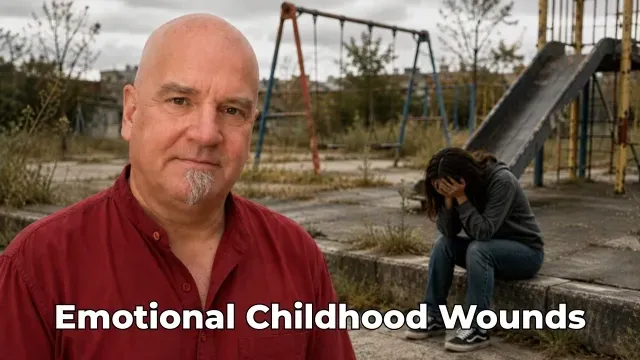
Emotional Childhood Wounds: Signs, Adult Patterns And A Gentle Path Forward
Emotional childhood wounds can sometimes continue to influence the way you feel, react and relate to other people long after childhood has ended. You may notice this through a strong fear of rejection, difficulty trusting people, people-pleasing, perfectionism, sensitivity to criticism or a feeling that you need to hide what you truly need in order to feel accepted.
These patterns do not automatically mean that you experienced childhood trauma. Sometimes they develop through repeated emotional experiences that may have seemed small from the outside but felt significant to you at the time. Perhaps you often felt criticised, overlooked, misunderstood, responsible for keeping the peace or unsure whether your feelings were welcome.
As an adult, you may understand intellectually that you are no longer in those earlier situations, yet certain moments can still bring surprisingly strong emotional reactions. A disagreement may feel like rejection. Somebody becoming distant may awaken a fear of abandonment. A small mistake may trigger shame or a harsh inner critic.
Understanding these reactions is part of a much wider emotional-healing picture. If you would like that broader foundation, you may find Emotional Healing & Emotional Trauma: The Complete Guide helpful alongside this article.
Exploring childhood emotional wounds is not about blaming the past or searching endlessly for something that went wrong. It is about becoming more curious about what shaped you, recognising the patterns that may still be influencing you and discovering whether those old ways of protecting yourself are still needed today.
In this guide, we will explore what emotional childhood wounds are, how they may show up in adult life and relationships, how they can influence self-worth and emotional reactions, and some gentle ways to begin moving forward.
"Emotional childhood wounds may continue to influence adult reactions and relationships, but recognising these patterns can help you understand yourself with greater clarity and compassion."
What Are Emotional Childhood Wounds?
Emotional childhood wounds are lasting emotional patterns that may develop when important needs for safety, connection, acceptance, understanding or reassurance were not consistently met during childhood.
They do not always come from one dramatic event. Sometimes they develop gradually through repeated experiences such as criticism, rejection, emotional distance, unpredictability, feeling responsible for other people's emotions or learning that certain parts of yourself were not welcome.
A child may adapt by becoming very independent, pleasing others, avoiding conflict, striving for perfection or hiding difficult feelings. These responses can be useful forms of protection at the time.
The difficulty comes when the same protective patterns continue automatically into adult life, even when the original circumstances are no longer present.
It is also important not to assume that every difficult childhood experience creates an emotional wound. People respond differently to similar experiences, and emotional childhood wounds are best understood as a way of exploring patterns rather than as a diagnosis.
"Emotional childhood wounds often develop through repeated experiences rather than one defining event, and the protective patterns formed in childhood can sometimes continue into adult life."
Emotional Childhood Wounds And Childhood Trauma: Are They The Same?
Not necessarily.
Emotional childhood wounds can describe painful experiences or unmet emotional needs that continue to influence the way you think, feel or relate to others as an adult. The term is useful for personal reflection, but it is not a clinical diagnosis.
Childhood trauma is a broader and more serious concept. It can involve experiences that overwhelm a child's ability to cope, including abuse, neglect, violence, loss or other deeply distressing events.
Some emotional wounds may be connected with trauma, but it is important not to assume that every difficult childhood experience was traumatic.
What matters most is how an experience affected you and whether patterns connected with it still influence your life today.
"Emotional childhood wounds and childhood trauma can overlap, but they are not the same thing. Understanding the difference helps you explore your past without automatically labelling every painful experience as trauma."
What Are The Five Emotional Wounds?
You may come across the idea of five emotional wounds when exploring childhood experiences. This personal-development framework describes five themes:
Rejection – feeling unwanted, excluded or as though there is something unacceptable about you.
Abandonment – feeling unsupported, left behind or afraid that important people will leave.
Humiliation – experiencing shame, embarrassment or feeling diminished by others.
Betrayal – having trust broken or feeling unable to rely on people who were important to you.
Injustice – experiencing treatment that felt unfair, rigid or lacking in understanding.
This framework can provide useful language for reflection, but it should not be treated as a clinical diagnosis or a definitive explanation of your childhood.
Your own experiences may fit several of these themes, none of them, or something entirely different. The purpose is not to place yourself into a category. It is to notice which experiences and emotional patterns feel relevant to your life now.
"The five emotional wounds can offer a useful framework for reflection, but your experiences are individual and do not need to fit neatly into somebody else's categories."
What Can Create Emotional Wounds In Childhood?
Emotional wounds can develop when a child repeatedly experiences situations that affect their sense of safety, belonging, acceptance or emotional connection.
Examples may include:
Frequent criticism, comparison or shaming.
Emotional neglect or feeling unseen and unheard.
Rejection or inconsistent affection.
Unpredictable conflict or tension at home.
Feeling responsible for a parent's emotions or wellbeing.
Being expected to hide feelings or “be strong”.
Love or approval that seemed dependent upon achievement or behaviour.
Separation, loss or significant changes in important relationships.
Two children can experience similar circumstances and respond very differently. These experiences do not automatically create lasting wounds.
What matters is the meaning the child made of what happened and the protective strategies they developed in response.
"Emotional wounds are shaped not only by what happened in childhood, but by how those experiences were felt, understood and adapted to at the time."
Signs Emotional Childhood Wounds May Be Affecting You As An Adult
Childhood emotional patterns can become so familiar that you may not immediately recognise them as protective responses. Instead, they can simply feel like part of your personality.
Possible signs include:
Strong sensitivity to criticism or rejection.
People-pleasing and difficulty saying no.
Fear that people you care about will leave.
Perfectionism or feeling that mistakes are unacceptable.
Difficulty trusting or relying on others.
Feeling responsible for other people's emotions.
Avoiding conflict even when something needs to be said.
A harsh inner critic or persistent feelings of inadequacy.
Withdrawing or shutting down when emotions become intense.
Emotional reactions that feel much stronger than the present situation seems to warrant.
These signs do not prove that you have unresolved childhood wounds. They are invitations to become curious about patterns that repeat.
For example, recognising your emotional triggers and flashpoints can help you notice when a present-day experience may be activating an older protective response.
The question is not simply, “Why am I reacting like this?” It can be more helpful to ask, “What might this reaction be trying to protect?”
"Adult patterns such as people-pleasing, perfectionism, fear of rejection and strong emotional triggers may sometimes point towards protective responses that began much earlier in life."
How Childhood Wounds Can Appear In Adult Relationships
Relationships often bring emotional childhood wounds into clearer view because closeness can activate old fears around rejection, abandonment, criticism or not feeling good enough.
This may show up as:
Needing frequent reassurance that someone still cares.
Withdrawing when conflict appears.
Becoming anxious when someone seems distant.
Over-giving to keep the relationship secure.
Struggling to express needs or set boundaries.
Interpreting disagreement as rejection.
Finding it difficult to trust, even when there is no obvious reason not to.
These reactions are not always about the person in front of you. Sometimes the present relationship touches an older expectation about what closeness means or what might happen when you become vulnerable.
If relationships repeatedly activate these patterns, Shadow Work And Relationships: Healing Triggers With Compassion explores this dynamic in more depth.
"Relationships can reveal old emotional expectations very quickly, especially around trust, rejection and closeness. Recognising the pattern gives you more choice in how you respond to it."
Why Can Small Present-Day Situations Trigger Strong Reactions?
Sometimes your emotional reaction seems much bigger than the situation in front of you.
A delayed message may feel like abandonment. Gentle criticism may trigger shame. Someone saying no may feel like rejection. Conflict may create an immediate urge to please, withdraw or defend yourself.
This can happen when the present situation resembles an earlier emotional experience. Your response is not necessarily about the past alone, but an old protective pattern may be adding intensity to what is happening now.
Learning to recognise these emotional triggers and protective responses can help you separate what belongs to the present moment from what may have deeper roots.
The aim is not to judge the reaction. It is to understand it well enough that you have more choice about what happens next.
"A strong reaction in the present can sometimes carry echoes of an earlier experience. Recognising that connection can create space between the trigger and your response."
Can Emotional Childhood Wounds Affect The Body?
Emotional experiences can have a physical dimension. When you feel threatened, rejected or overwhelmed, your body may respond through changes in breathing, muscle tension, heart rate, digestion or alertness. Stress can produce real physical symptoms as well as emotional ones.
This is different from saying that emotional wounds are literally “stored” in a particular part of the body.
A more grounded approach is to notice how your body responds when an old pattern is activated. You might become tense, hold your breath, feel restless or want to withdraw before you have consciously understood what has upset you.
Body-based or somatic practices can help you become more aware of these responses without forcing yourself back into difficult memories. If you would like to explore this further, Somatic Shadow Work: A Body-Based Guide explains a gentle approach to working with present-moment sensations and protective responses.
"Emotional wounds are not simply stored in one part of the body, but stress and emotional activation can have genuine physical effects. Learning to notice those responses can become part of understanding your patterns."
How Long Does It Take To Heal Childhood Emotional Wounds?
There is no fixed timeline for healing childhood emotional wounds. People are affected by difficult experiences in different ways, and recovery from trauma-related difficulties can also unfold very differently from person to person.
For some people, greater awareness may bring noticeable changes quite quickly. Other patterns, particularly those involving trust, relationships, shame or long-standing protective responses, may take much longer to understand and change.
It can be more helpful to look for gradual signs of progress, such as:
Recognising a trigger sooner.
Recovering more quickly after an emotional reaction.
Expressing your needs more clearly.
Setting healthier boundaries.
Responding to yourself with greater compassion.
Feeling that old patterns have less influence over your choices.
Healing does not need to mean erasing the past. It can mean developing a different relationship with what happened and creating more freedom in how you live now.
"There is no correct timetable for healing childhood emotional wounds. Progress is often better measured by greater awareness, choice and emotional flexibility than by reaching a final finishing point."
Do Emotional Wounds Ever Fully Heal?
Healing does not always mean that a painful experience disappears completely or that you never feel its effects again.
For many people, progress means that old experiences have less influence over the present. A familiar trigger may still appear, but you recognise it sooner. You may recover more quickly, respond differently or feel less controlled by the pattern.
Trauma can affect people very differently, and some trauma-related symptoms may lessen over time while others benefit from professional support.
A gentler question than “Am I completely healed?” can be:
“Do I have more awareness, choice and freedom than I had before?”
That creates room for genuine progress without demanding that you erase your history.
"Healing does not have to mean forgetting the past. It can mean that the past has less power over how you feel, relate and choose in the present."
How Can You Begin Healing Childhood Emotional Wounds?
Healing often begins with awareness rather than action. Before trying to change a pattern, it helps to understand when it appears, what tends to trigger it and what you may be trying to protect yourself from.
A gentle starting point might include:
Noticing repeated emotional reactions without judging yourself.
Identifying situations that trigger rejection, shame, fear or withdrawal.
Becoming clearer about your emotional needs and boundaries.
Journalling about patterns rather than repeatedly reliving painful memories.
Practising grounding, breathing or gentle movement when emotions feel intense.
Developing a more compassionate inner voice.
Seeking appropriate professional support when experiences feel overwhelming.
For some people, inner-child healing can also provide a useful way of exploring unmet needs and developing a more supportive relationship with themselves in the present.
You do not need to uncover every childhood memory to move forward. Often, recognising the patterns affecting your life now is enough to begin.
If you recognise these patterns but feel you would benefit from exploring them with personal guidance and support, you can learn more about my One-to-One Coaching and how we can work together.
"Healing childhood emotional wounds can begin with something simple: noticing the pattern, understanding what it may be protecting and choosing a gentler response in the present."
A Gentle Path Forward With The Dream Method
Understanding an emotional childhood wound is only the beginning. The next step is learning how to relate to the pattern with greater awareness, compassion and choice.
The Dream Method provides a five-stage framework for this process:
DISCOVER → REALISE → EMBRACE → ACTUALISE → MASTER
Discover the emotional patterns that keep appearing.
Realise what may be underneath those reactions and where they may have developed.
Embrace what you find without judgement or rejection.
Actualise new boundaries, responses and choices in everyday life.
Master the ongoing practice of recognising old patterns without automatically being governed by them.
If you recognise some of the patterns explored in this article and would like to understand them more deeply, the next step is my free Emotional Childhood Wounds Webinar.
In the webinar, I explore how earlier emotional experiences may continue to influence adult thoughts, emotional reactions, relationships and protective patterns, and introduce the Dream Method as a gentle framework for understanding what may be happening within you.
Watch The Free Emotional Childhood Wounds Webinar

"Understanding where an emotional pattern may have begun can create greater awareness in the present. The Emotional Childhood Wounds Webinar is the next step if you would like to explore that connection more deeply."
Emotional Childhood Wounds Frequently Asked Questions
What Is The Hardest Childhood Trauma To Heal From?
There is no single type of childhood trauma that is universally the hardest to heal from.
The impact can depend on many factors, including what happened, how long it continued, the age of the child, whether a trusted person was involved and what support was available afterwards.
Rather than comparing experiences, it is usually more helpful to recognise how your own past may still be affecting you now.
What Are The Biggest Childhood Traumas?
There is no recognised list of the “five biggest” childhood traumas.
Serious childhood adversity can include physical, sexual or emotional abuse, neglect, exposure to violence, significant loss and other experiences that overwhelm a child's ability to cope.
Not everyone who experiences adversity develops PTSD or the same long-term difficulties.
What Are Four Symptoms Of Psychological Trauma?
There is not one universal four-symptom test for psychological trauma. Trauma-related difficulties can appear in different ways.
Common PTSD symptoms can include:
Distressing memories, nightmares or flashbacks.
Avoiding reminders of what happened.
Feeling constantly alert, tense or on edge.
Emotional numbness, sleep difficulties or problems concentrating.
Experiencing some of these symptoms does not by itself mean that you have PTSD. A qualified healthcare or mental-health professional can assess persistent or severe symptoms.
Are There Seven Emotional Stages Of Trauma Or Four Stages Of Emotional Healing?
There is no single universal sequence of seven trauma stages or four emotional-healing stages that everyone moves through.
Different therapeutic and personal-development approaches use different models. Healing is rarely a neat progression where one stage is permanently completed before the next begins.
The Dream Method also uses five stages — DISCOVER → REALISE → EMBRACE → ACTUALISE → MASTER — but this is my personal-development framework, not a clinical model of trauma recovery.
Where Are Shame And Emotional Trauma Stored In The Body?
It is common to hear phrases such as “trauma is stored in the body” or “shame is held in the body”, but emotions are not known to be stored in one particular body part.
What is real is that stress and emotional activation can have physical effects. You may notice muscle tension, changes in breathing, a faster heartbeat, stomach discomfort or other bodily sensations when you feel threatened or overwhelmed.
Somatic approaches focus on becoming aware of these present-moment bodily responses. There is also no single physical sensation that proves your body is “releasing trauma”.
Why Do I Cry When I Think About My Childhood?
Crying can be a natural emotional response when memories connect with sadness, loss, anger, loneliness or needs that were not met at the time.
It does not necessarily mean that something is wrong or that a particular memory must be traumatic.
If childhood memories repeatedly cause intense distress, flashbacks, panic or difficulties functioning in everyday life, it may be helpful to explore them with an appropriately qualified professional.
How Do You Know If You Have Healed From Childhood Trauma?
There is no single test or moment that proves you are completely healed.
Signs of progress may include recognising triggers sooner, recovering more easily after difficult emotions, feeling safer in relationships, expressing your needs more clearly and having greater freedom to choose how you respond.
For somebody with PTSD or other significant trauma-related difficulties, recovery can look different and appropriate professional treatment may be important.
A useful question can be:
“Does my past have less control over the way I live today?”
Further Reading On Emotional Childhood Wounds
If you would like to explore some of the themes in this article more deeply, these related guides may help:
Inner-Child Healing: A Gentle Step-by-Step Guide
Explore unmet childhood needs, reparenting and ways of developing a more supportive relationship with your younger self.
Healing Childhood Wounds As A Highly Sensitive Person
A more specific guide for highly sensitive people who feel earlier emotional experiences may still be affecting them.
Shadow Work And Relationships: Healing Triggers With Compassion
Explore how old emotional patterns can surface through closeness, conflict, rejection and relationship triggers.
Somatic Shadow Work: A Body-Based Guide
Explore the body-based side of emotional patterns and how present-moment sensations can become part of greater self-awareness.
What Is Shadow Work? A Complete Guide For Healing And Growth
A broader introduction to recognising hidden emotional patterns, protective responses and parts of yourself that may have been pushed out of awareness.
Final Thoughts
Emotional childhood wounds can influence the way you see yourself, respond to other people and navigate relationships long after the original experiences have passed.
The aim is not to blame the past or analyse every memory. It is to recognise the patterns that may still be shaping your life and begin meeting them with greater awareness and compassion.
You may notice that some patterns soften simply through understanding them. Others may take time, practice and deeper support. What matters is that you do not have to work on everything at once.
If this article has helped you recognise patterns connected with rejection, abandonment, criticism, people-pleasing, shame or other childhood experiences, the next step is my free webinar.
Watch The Free Emotional Childhood Wounds Webinar
In the webinar, I explore how earlier emotional experiences may continue to influence adult thoughts, emotional reactions, relationships and protective patterns, and introduce the Dream Method as a gentle framework for understanding what may be happening within you.
I look forward to connecting with you in my next post,
Until then, be well and keep shining.
Peter. :)