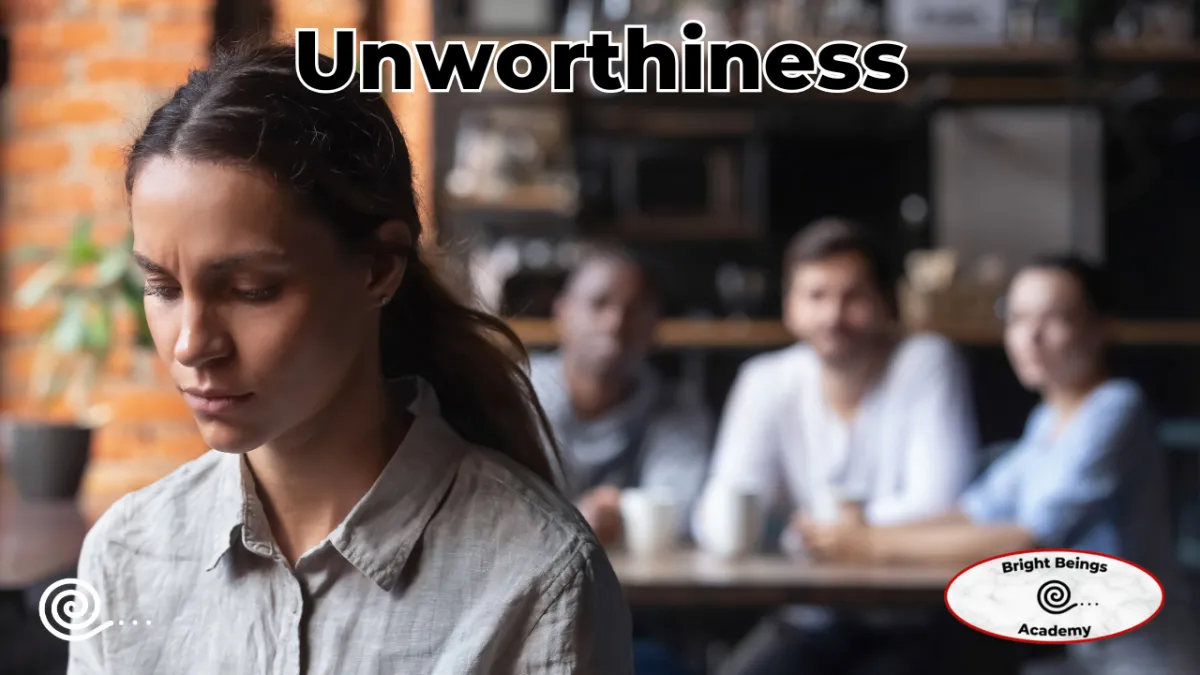
Unworthiness
The profound sentiment of unworthiness encapsulates the chronic conviction that one is inherently deficient, unsuitable, or not worthy of affection, professional success, overall contentment, or societal acceptance.
This deeply-seated emotion is typically a consequence of formative life episodes, cultural and societal expectations, as well as harmful self-directed narratives. Unlike a transient worry or a momentary doubt, unworthiness is a pervasive emotional condition that infiltrates and taints each facet of one's existence—impacting interpersonal relations, professional pursuits, and even one's sense of self.
Manifestations of this feeling are numerous and varied; they often materialise as persistent and corrosive self-criticism, a compulsion toward perfection that is never quite satisfied, an overwhelming trepidation about failing in any endeavour, and a deliberate eschewal of situations where one might be exposed or emotionally susceptible.
Unworthiness Is An Unyielding Sentiment Of Insufficiency
Accompanying these behavioural patterns is an unyielding sentiment of insufficiency—a haunting notion that perpetually whispers that one's efforts and accomplishments are perpetually lacking, that the proverbial bar is never reached.
This feeling of never being "good enough" echoes throughout one's internal monologue, permeating thoughts and influencing actions. This sense of never measuring up can have profound implications not just on an individual’s mental and emotional well-being, but also on their ability to live a fulfilling and authentic life.
The pervasive feeling of unworthiness does more than just distort one's self-image; it can hamper the pursuit of opportunities, hinder personal growth, and corrode the joy and spontaneity of everyday living. The inner critic, fuelled by this belief, becomes an obstacle to recognising and embracing the potential for genuine happiness and achievement in one's life.
The Roots of Unworthiness
Understanding where unworthiness originates is a crucial step towards overcoming it. The roots of this emotional pain often include:
Critical or Disapproving Authority Figures
Growing up with highly critical parents, teachers, or role models can instil a fear of failure and the idea that your worth is tied to achievements.
Neglect or Emotional Absence
Children who lack emotional support may internalise a belief that they are unworthy of love or attention.
Traumatic Experiences
Abuse, bullying, or significant rejection in childhood or adolescence can lead to deeply held feelings of shame and inadequacy.
Societal and Cultural Expectations
Social media and cultural norms often perpetuate unattainable ideals, causing individuals to feel inferior when they don’t measure up.
Internalised Narratives
Negative self-talk and limiting beliefs can perpetuate feelings of unworthiness, forming a cycle that feels impossible to break.
The Numbness Trance of Unworthiness
Personally, I call this the numbness trance. This trance traps individuals in self-defeating cycles—avoiding risks, doubting achievements, and expecting rejection. The numbness trance of unworthiness disconnects you from your inherent value and from others, reinforcing isolation and dissatisfaction.
The Impact of Unworthiness
Unworthiness doesn’t only affect your self-perception; it has far-reaching consequences:
Relationships
People with feelings of unworthiness may avoid intimacy, fear vulnerability, or engage in people-pleasing to avoid rejection.
Career and Ambitions
A lack of self-belief can result in avoiding opportunities, self-sabotage, or settling for less than you deserve.
Mental and Physical Health
Chronic feelings of unworthiness contribute to anxiety, depression, and stress-related illnesses such as insomnia or digestive issues.
Sense of Self
Unworthiness undermines your ability to see your strengths and accomplishments, leaving you disconnected from your authentic self.
Breaking Free: A Path to Healing
Healing unworthiness requires intentional practices and a commitment to nurturing your inner self.
Awareness and Acceptance
Acknowledge the presence of unworthiness without judgment. Recognise that it is a learned response, not a reflection of your true self.
Challenge Limiting Beliefs
Confront negative self-talk by asking, "Is this thought true, or is it based on old conditioning?" Replace harmful beliefs with empowering ones.
Practice Self-Compassion
Treat yourself with kindness and understanding, especially when you feel vulnerable. Affirmations like, "I am enough just as I am," can be transformative.
Embrace Vulnerability
Being open about your struggles fosters authentic connections with others and challenges the shame that unworthiness thrives on.
Cultivate Gratitude
Shift your perspective by focusing on the positives in your life. Gratitude practices can boost self-worth and reduce self-criticism.
Mindfulness and Meditation
Mindfulness helps you observe your thoughts without judgment, while meditation fosters inner peace and self-awareness.
Seek Support
Whether through therapy or trusted relationships, sharing your feelings can help you process and release them.
Reframe Past Experiences
View your past through a compassionate lens, understanding that your worth is not determined by others’ actions or societal expectations.
Focus on Strengths
Celebrate your accomplishments and qualities, however small. Focusing on your strengths builds confidence and counters self-doubt.
Embracing Your True Worth And Your True Self
Overcoming unworthiness is not about fixing yourself—it’s about rediscovering your inherent value. This journey requires self-reflection, vulnerability, and a commitment to nurturing your sense of self. By practising compassion, mindfulness, and self-awareness, you can break free from the trance of unworthiness and live a life guided by self-love and acceptance.
Remember, your worth is not tied to achievements, appearance, or others’ opinions. You are deserving of love, happiness, and success simply because you exist. In the Dream Method coaching programme, I do run through the five steps to help you find your true self, underneath the layers of conditioning and programming we have all been through as human beings. More on that later.
FAQs About Unworthiness
1. Why do I feel unworthy even when I achieve success?
Feelings of unworthiness are often rooted in subconscious beliefs, which means external achievements may not address the deeper emotional causes. Healing requires inner work and self-compassion.
2. Can unworthiness ever completely go away?
While the feelings may arise occasionally, with consistent self-awareness and practice, you can significantly reduce their impact and cultivate a strong sense of self-worth.
3. How can I stop negative self-talk?
Start by recognising negative thoughts without judgment. Challenge their validity and replace them with affirmations or truths that reflect your inherent worth.
4. Is therapy necessary to overcome unworthiness?
While not always necessary, therapy can provide valuable tools and insights for addressing the root causes of unworthiness, especially if it stems from trauma.
5. Can mindfulness really help with feelings of unworthiness?
Yes! Mindfulness allows you to observe your thoughts without attaching to them, creating space to challenge and reframe harmful beliefs.
When Unworthiness Shapes Your Self-Image
Feeling unworthy can gradually influence the way you see yourself.
You may begin to question whether you deserve love, opportunity, recognition or happiness. Even when something positive happens, part of you may struggle to receive it because it does not match the internal picture you have developed of yourself.
This is why exploring self-image can be so valuable.
Rather than trying to convince yourself that you should feel differently, you can begin becoming curious about how your current view of yourself developed and whether it still reflects who you are today.
If you would like to explore this connection more deeply, my free Self-Image Webinar is a natural next step.
Watch The Free Self-Image Webinar
The webinar explores how self-image influences confidence, choices and the way you experience yourself, and introduces a gentler approach to creating change without forcing yourself to become somebody else.
Unworthiness Frequently Asked Questions
What Does Feeling Unworthy Mean?
Feeling unworthy can involve an underlying belief that you do not deserve love, acceptance, success, happiness or other positive experiences.
For some people it is very obvious. For others it appears more subtly through self-doubt, difficulty receiving praise, comparing themselves with other people or repeatedly questioning whether they are good enough.
Where Can Feelings Of Unworthiness Come From?
There is rarely one single cause.
Your sense of worth can be influenced by relationships, criticism, rejection, difficult experiences, cultural expectations and the messages you absorbed about yourself while growing up.
The important point is not to find somebody to blame. It is to begin understanding how your present view of yourself developed.
Is Unworthiness The Same As Low Self-Esteem?
They are closely connected, but they are not necessarily identical.
Self-esteem often relates to how positively you evaluate yourself, whereas unworthiness can feel deeper: a sense that you do not deserve something simply because of who you believe yourself to be.
Both can strongly influence self-image.
Can Childhood Experiences Affect Feelings Of Unworthiness?
They can sometimes contribute.
Repeated criticism, rejection, comparison, emotional neglect or feeling that love depended upon behaving in a particular way can influence how someone learns to see themselves.
However, childhood is only one possible influence. Feelings of unworthiness can develop or become reinforced through many experiences throughout life.
How Can I Begin Developing A Healthier Sense Of Self-Worth?
Begin by noticing the situations in which unworthiness appears rather than immediately trying to remove the feeling.
Ask yourself what you believe about yourself in that moment, where that belief may have come from and whether it accurately reflects who you are now.
Small experiences of self-trust, healthy boundaries, receiving kindness and treating yourself with greater compassion can gradually support a different relationship with yourself.
If you would like to explore the wider relationship between self-worth and self-image, you can watch the free Self-Image Webinar.
Further Reading On Unworthiness And Self-Worth
If you would like to explore self-worth and self-image further, these related articles may help:
Self Worth
Explore what self-worth means, how it differs from self-esteem and why your sense of inherent value matters.
Self Esteem Improvements
Explore practical ways of developing a more supportive relationship with yourself and reducing persistent self-doubt.
Negative Self Image: Why It Forms And How Healing Begins
Explore how difficult experiences, shame and learned beliefs can influence the way you see yourself.
How Self-Image Is Formed And Why It Feels So Hard To Change
Explore how self-image develops and why old perceptions of yourself can continue long after the circumstances that shaped them have changed.
Inner Critic Versus Inner Coach
Explore the difference between harsh internal criticism and developing a more constructive inner relationship.
I look forward to connecting with you very soon.
Until then, be well and keep shining.
Peter. :)