Mystery School: History, Teachings, Practices and How to Begin Your Own Initiatory Path
A mystery school is a lineage of initiatory teaching that blends philosophy, ritual, contemplative practice and the arts to cultivate inner transformation. From the Eleusinian rites of ancient Greece to the Hermetic, Rosicrucian, Masonic and modern esoteric revivals, the core promise has stayed remarkably consistent: awakened perception, ethical refinement, and a lived sense of unity.
Today, authentic programmes translate these principles into accessible practices—breathwork, meditation, movement (including Qi Gong), symbolic study and service—so you can embody wisdom rather than just accumulate information.
What is a mystery school?
In classical terms, “mysteries” referred to initiatory traditions whose teachings were transmitted through ritual, symbolism and experiential learning, often under vows of discretion. Candidates were prepared, initiated, and integrated into a community devoted to wisdom and ethical living.
Modern usage of mystery school extends this idea to schools of sacred knowledge and inner work that preserve (and adapt) these initiatory methods for contemporary seekers.
Key characteristics you’ll often find:
Initiation & mentorship – structured rites or thresholds that mark genuine growth.
Symbolic language – myth, geometry, music and art used as maps of consciousness.
Inner practices – contemplation, breath, movement and “inner alchemy” for direct experience.
Ethical refinement & service – transformation is measured by how you live.
A brief lineage map
Ancient roots: Greece & Egypt
Eleusinian Mysteries (Demeter & Persephone) were the best-known Greek rites, famous for powerful initiations and secrecy.
Isis/Osiris traditions spread across the Greco-Roman world; initiates swore oaths and participated in symbolic rites oriented to rebirth.
Philosophical schools
Pythagorean communities united mathematics, harmony and a disciplined way of life as a path to the good and the beautiful.
Hermetic writings (Corpus Hermeticum) framed a cosmos of correspondences—“as above, so below”—and became foundational for later esoteric thought.
Renaissance transmission
Marsilio Ficino translated the Hermetica in 1463–64, sparking a European revival of “ancient wisdom” studies in Florence.
Early modern & Enlightenment expressions
Rosicrucian manifestos (17th c.) presented a reforming, symbolic brotherhood blending alchemy, medicine and spirituality.
Freemasonry evolved as a fraternal initiatory order with symbols, degrees and ethical ideals; it became hugely influential across the West.
19th–20th century revivals
Theosophy and the Hermetic Order of the Golden Dawn systematised ritual, Kabbalah, tarot and Hermetic practice for modern seekers; poets like W. B. Yeats and occultists like Aleister Crowley were involved.
Carl Jung reinterpreted alchemy and Gnostic motifs psychologically, bringing esoteric symbolism into depth psychology.
What do mystery schools actually teach?
While curricula vary, consistent strands run through the traditions:
Cosmic correspondence & sacred pattern
Hermetic and Pythagorean streams emphasise proportion, harmony and meaningful pattern—from number and geometry to music and myth.Initiation as lived transformation
Crossing a threshold is less about spectacle and more about measurable shifts in perception, ethics and embodiment; secrecy historically protected the sanctity of the experience (and the community).Inner alchemy
Practices transmute raw experience into wisdom—today this can include meditation, Qi Gong and mindful breath, echoing the aims of Daoist neidan (internal alchemy): refining vitality, spirit and awareness.Service & beauty
Art, music and community service are not “extras” but expressions of integrated insight.
Influential figures linked—sometimes quietly—to mystery-school ideas
Leonardo da Vinci – His Vitruvian Man contemplates human-cosmic proportion, mirroring the mystery-school fascination with sacred geometry (without claiming formal initiation).
Johannes Kepler – Inspired by Platonic harmony, he modelled the cosmos with the five regular solids before formulating his orbital laws, revealing a mystical-mathematical imagination at work.
Isaac Newton – Alongside physics, he studied and wrote extensively on alchemy and biblical chronology; his private papers show intense engagement with esoteric traditions.
Wolfgang Amadeus Mozart – A documented Freemason, he encoded initiatory symbolism in works like The Magic Flute.
William Blake – Poet-artist steeped in visionary Christianity and esoteric symbolism, whose mythic art echoes mystery-school themes.
J. W. von Goethe – Poet-scientist and Freemason whose “living” approach to nature and colour straddled science and esoteric insight.
Benjamin Franklin – Printer, statesman and Freemason; his membership shows how initiatory fraternities intersected with Enlightenment civic life.
W. B. Yeats – Nobel laureate and long-time member of the Golden Dawn, he wove ritual symbolism into modern poetry.
Rudolf Steiner – Founder of Anthroposophy and the Waldorf movement; developed a disciplined path of spiritual science.
John Dee – Elizabethan mathematician, navigator and magus whose angelic diaries and Hermetic interests typify Renaissance esotericism.
Richard Wagner – Parsifal distils Grail-initiation motifs into music-drama.
Hypatia & Plutarch – Neoplatonist philosopher of Alexandria and the Delphic priest-philosopher; both bridged philosophy, ritual and civic life. Encyclopedia Britannica
Note: Influence ranges from documented membership (e.g., Masonic records) to clearly traceable intellectual engagement (e.g., Hermetic, Pythagorean or alchemical sources). Where historians debate direct affiliations, I’ve framed connections as thematic rather than institutional.
Why mystery schools still matter
Integration over information – They privilege experiential knowing and character formation over mere data.
A framework for meaning – Symbolic literacy helps you read your life—dreams, synchronicities, creative impulses—as guidance rather than noise.
Wholeness – Movement, breath and contemplative practice bring the body back into spiritual development, so insight becomes embodied action. Wikipedia
What you can expect in a reputable, modern mystery school
Clear ethics & duty of care (consent, boundaries, no undue secrecy)
Skilled facilitation (mentors with real practice, not just lore)
A balanced curriculum (study, practice, service, reflection)
Integration support (journalling, coaching, community)
Getting started: a simple pathway
Read with discernment – Plato (Timaeus), selected Hermetica, and sympathetic scholarship offer solid ground. Wikipedia
Practise daily – Ten minutes of breathing, mindful movement, and brief symbolic contemplation do more than ten hours of theory.
Seek community – Transformation accelerates with peers and mentors who hold you kindly to your highest.
Choose a programme – Look for initiatory structure, ethical clarity, and practices you can actually sustain.
FAQs
Is a mystery school a religion?
Not necessarily. Classical “mystery religions” were cults with rites; modern mystery schools may be multi-tradition learning communities focused on practice and transformation rather than belief. Encyclopedia Britannica
Isn’t secrecy a red flag?
Healthy discretion protects inner work from performance and group from sensationalism. Good schools explain why and keep student welfare paramount. Historical oaths of secrecy were common, but contemporary programmes are far more transparent. Encyclopedia Britannica
Can science and mystery schools coexist?
Yes. Many innovators held both lenses—Kepler’s harmonics, Newton’s alchemy alongside physics, and Jung’s psychological reading of alchemy are famous examples. Encyclopedia BritannicaPsychestorage.knaw.nl
Where do practices like Qi Gong fit?
Qi Gong aligns with the mystery-school ethos: embodied inner work, breath, energy cultivation and ethical living—parallels to Daoist neidan (internal alchemy). Encyclopedia BritannicaWikipedia
Ready to experience a mystery school—safely and authentically?
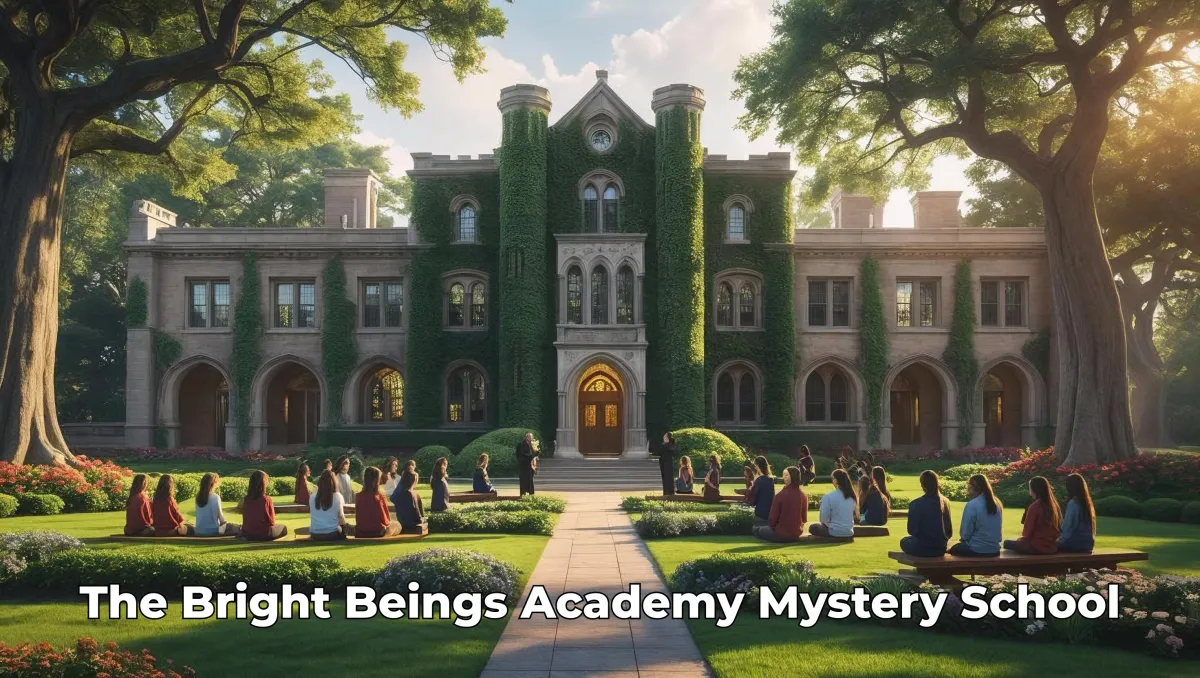
If you’re curious to live these teachings—not just read about them—Bright Beings Academy offers a modern mystery school pathway that blends sacred wisdom with practical tools (including Qi Gong) for embodied transformation, clarity and purpose.
Start here: brightbeingsacademy.com/mystery-school
Sources & further reading
Britannica entries on Eleusinian Mysteries, Mystery Religion, Hermetic Writings, Pythagoreanism, Freemasonry, Rosicrucianism, Theosophy, Golden Dawn, Vitruvian Man, Golden Ratio, Mozart & The Magic Flute, Rudolf Steiner, Richard Wagner, Plutarch, Hypatia, Johannes Kepler, and Geometry (Platonic solids). Eternal PromisesEncyclopedia Britannica+7Encyclopedia Britannica+7Encyclopedia Britannica+7Wikipedia+2Wikipedia+2EBSCOBritannica KidsClint Byars
British Library & Cambridge Digital Library materials on Newton’s alchemy. PsycheEncyclopedia Britannica
Poetry Foundation on William Blake; reputable histories on Goethe & Freemasonry. Britannica KidsWikipedia
Britannica on Daoist neidan and Qigong. lopedia BritannicaWikipedia